Wholesale Foldable Electric Kettle for Outdoor and Travel Use
Space constraints no longer dictate what appliances you can own. A Foldable Electric Kettle redefines convenience for travelers, campers, students in dormitories, and professionals living in compact apartments. Unlike traditional rigid kettles that occupy permanent counter space, this collapsible version collapses to a fraction of its expanded size, sliding effortlessly into a backpack, carry-on luggage, or a drawer. TEH Electric Appliance has spent years refining the engineering behind this portable boiling solution, ensuring it delivers rapid heating, robust safety protections, and long-term durability without adding unnecessary weight.
When you examine how a Foldable Electric Kettle operates, the appeal becomes immediately clear. The body uses high-grade platinum-cured silicone that withstands repeated folding cycles without developing cracks or absorbing odors. The heating element, usually a concealed stainless steel plate, transfers energy directly into the water while remaining protected against mineral buildup. Dual-voltage compatibility in select TEH Electric Appliance models means you can plug into outlets across North America, Europe, and Asia without carrying a separate voltage converter. This level of thoughtful design transforms what could be a simple travel gadget into a genuinely reliable daily-use appliance. Our Foldable Electric Kettle series includes products such as Foldable Electric Hot Pot, etc.
Environmental Considerations and Energy Consumption
A Foldable Electric Kettle generally consumes less energy per use than a microwave or stovetop kettle because its heating element directly contacts the water, minimizing conduction losses. The TEH Electric Appliance ProFold FK-01 draws 800W at 120V, boiling 0.6 liters in roughly 4.5 minutes, which translates to approximately 0.06 kilowatt-hours per boil cycle. At an average residential electricity rate of 15 cents per kilowatt-hour, a single boil costs less than one cent. The reduced water capacity compared to full-sized kettles encourages users to heat only what they need, avoiding the common habit of boiling excess water that subsequently cools unused.
From a materials perspective, the silicone body contains fewer metal components than a traditional kettle, slightly reducing the mining and smelting footprint per unit.
- View as
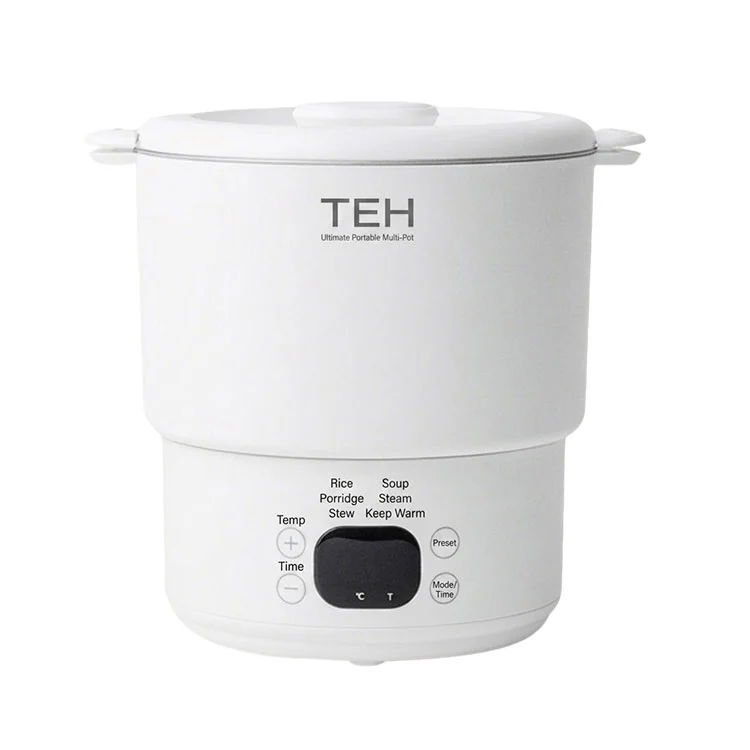
Foldable Electric Hot Pot
TEH Electric Appliance is a premier China Manufacturer of the Foldable Electric Hot Pot, the ultimate latest invention for the global traveler. This Dual-Voltage Travel Cooker features a detachable structure, a high-precision Exposed NTC Sensor, and a space-saving foldable design. With 304 Stainless Steel contact surfaces and a 110V/220V universal power system, it is the ideal purchase for wholesale distributors in the premium travel, gift, and outdoor sectors at a Factory Direct Price.
As a reliable Foldable Electric Kettle manufacturer and supplier in China, TEH Electric Appliance has custom options and volume discount pricing. Please just send us a quotation!