
How to Choose a Vacuum Cleaner for Carpet and Hard Floors?
The best vacuum for a mixed-floor home keeps good contact with carpet and hard flooring, steers easily between rooms and does not make maintenance feel like a chore. When shoppers search for a vacuum cleaner for carpet and hard floors, they usually want one machine to handle different surfaces without a pile of extra attachments. Start with the floors you clean, then check the head, airflow, filter and reach.
Start With the Floor Mix in Your Home
A room with low-pile carpet, tile and wood needs a different setup from a home with thick rugs throughout. Make a quick list of the surfaces that take most of your cleaning time. Note where crumbs collect, where hair gets caught and where the head needs to slide under furniture. This is a more useful starting point than choosing by the highest number on a product page.
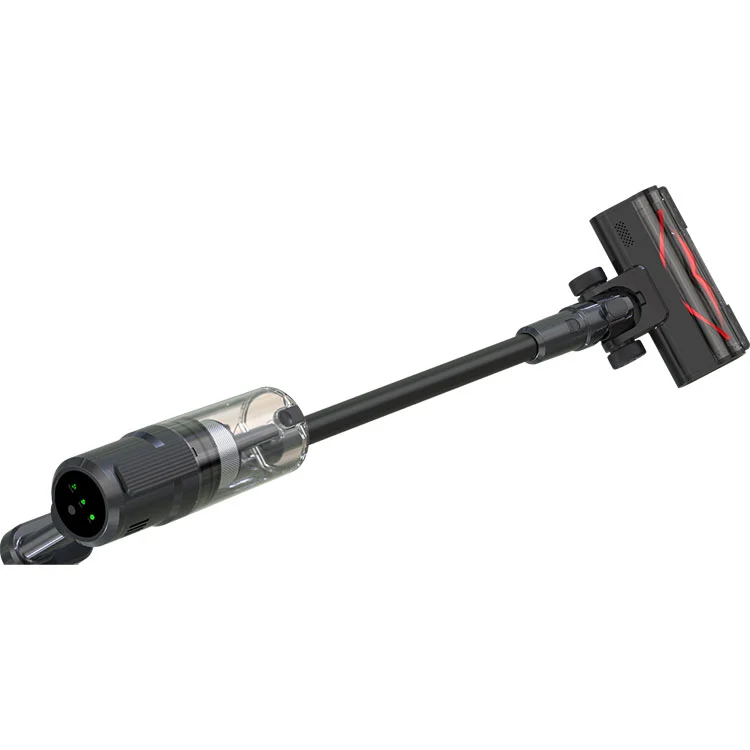
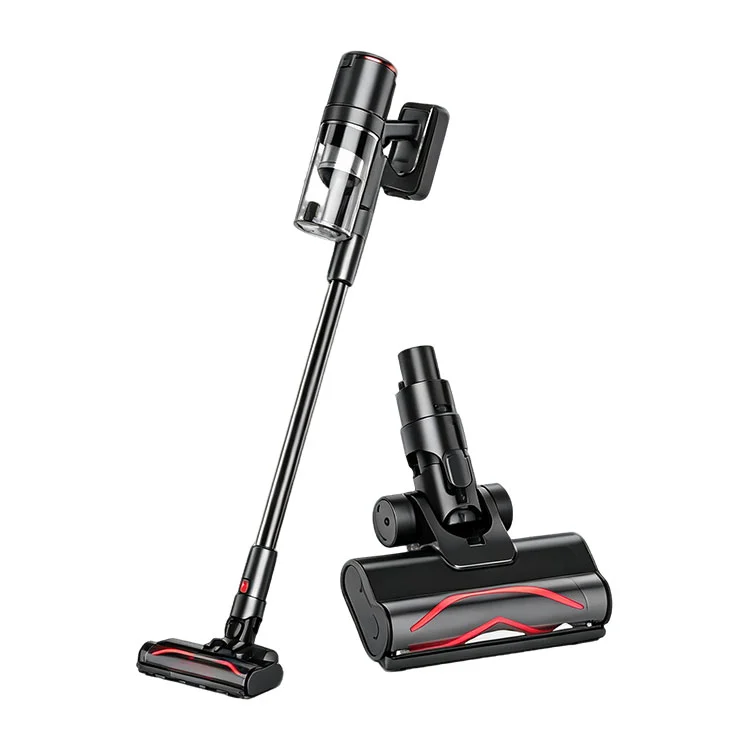
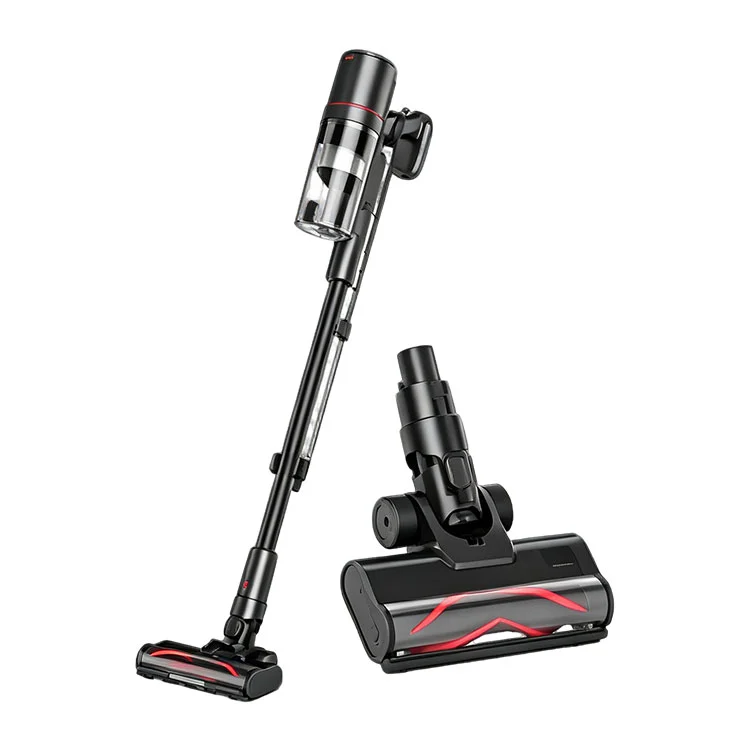
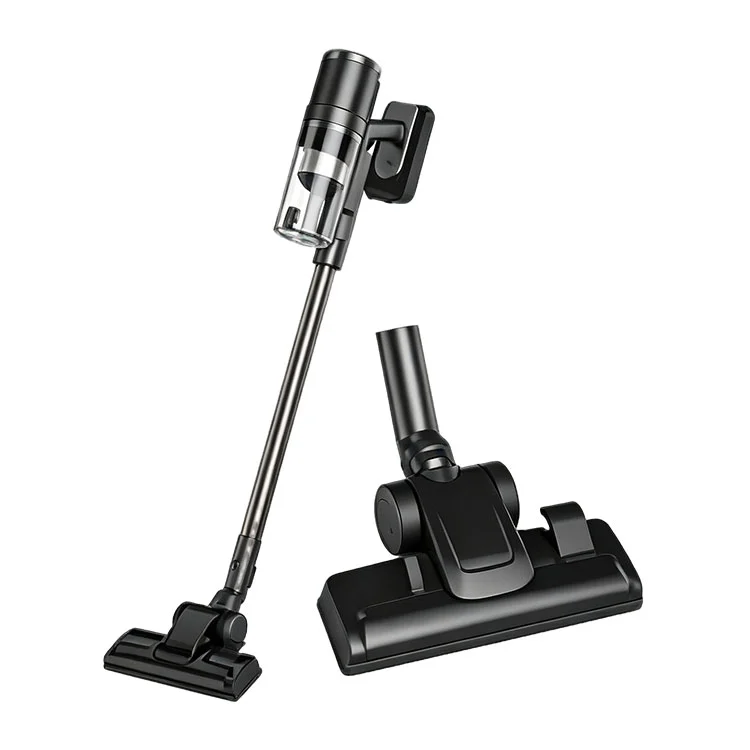
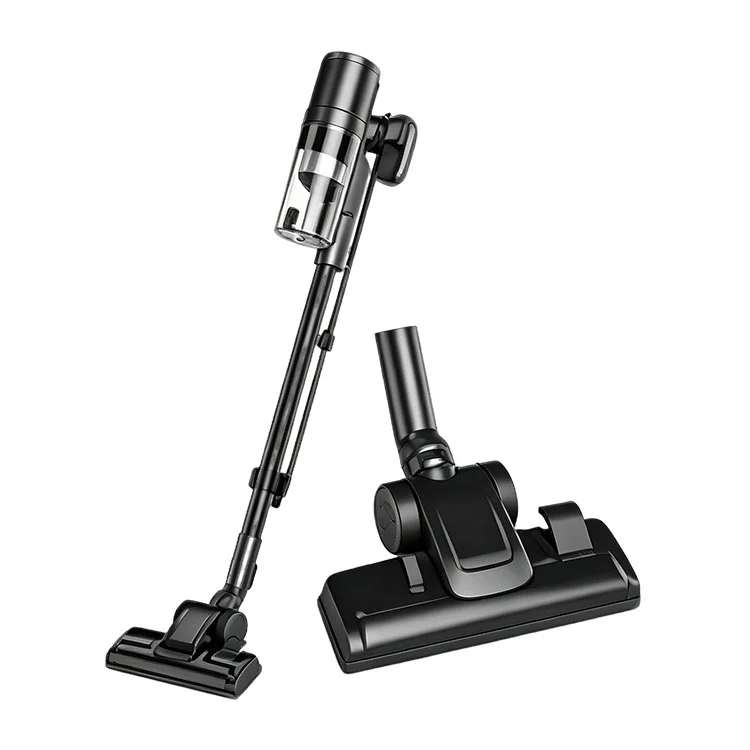
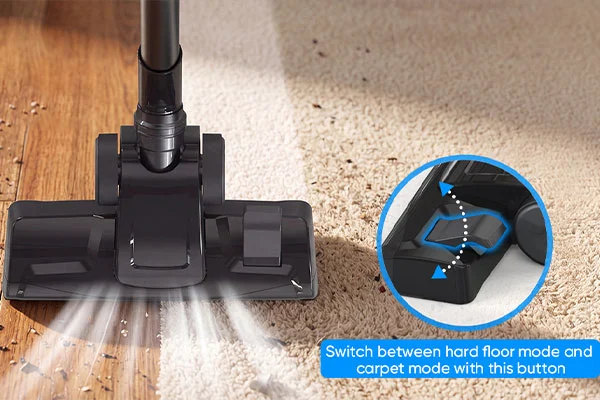
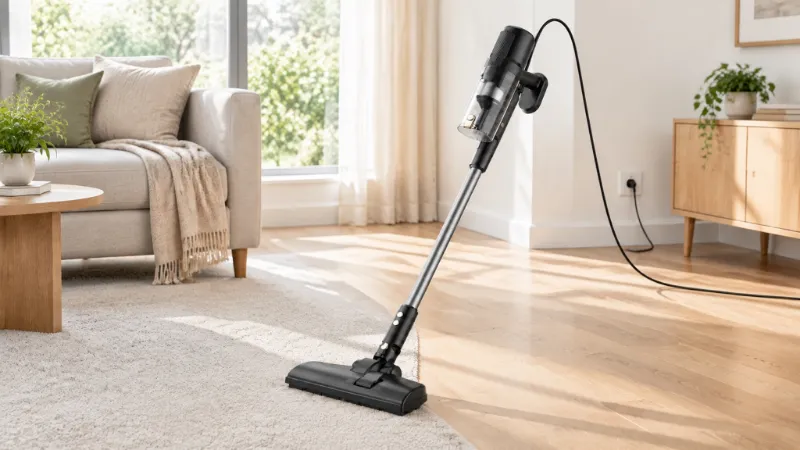
For vacuum cleaners for home use, a balanced floor head is often more important than a long accessory list. It should sit flat enough to collect fine dust on hard floors, but still move smoothly when the front edge reaches carpet. Check the wheels, the swivel joint and the connection to the tube. If the head twists when you change direction, the machine will feel tiring even when the motor has plenty of power.Check How the Floor Head Meets Each SurfaceThe head is the first part to test when comparing the best vacuum cleaner for carpet and hard floors. On carpet, look for steady brush contact that can lift hair and crumbs without forcing you to push hard. On wood or tile, the head should glide without scraping, catching at the edge or leaving a strip of dust along the wall. The transition between surfaces is where weak designs become obvious, so test it slowly instead of judging from a studio photo.
A vacuum cleaner with motorized floor head can help when carpet fibres hold hair and grit, but the motor does not replace a sensible head shape. Ask whether the brush can be cleared, whether the wheels roll freely and whether the head turns far enough for corners. If a model uses a manual floor selector, confirm the position for each surface and whether brush contact changes as described.
Check How the Floor Head Meets Each Surface
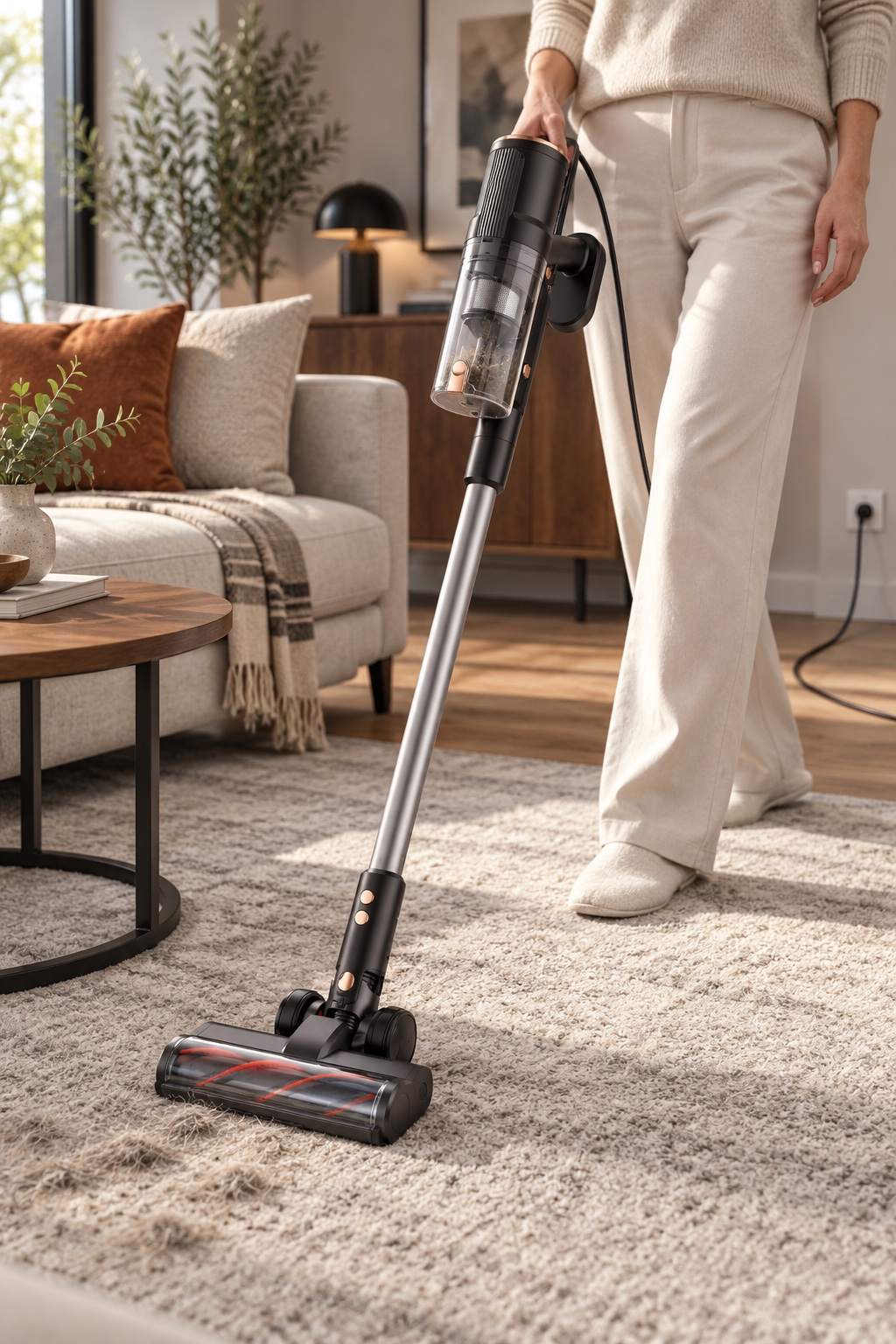
The head is the first part to test when comparing the best vacuum cleaner for carpet and hard floors. On carpet, look for steady brush contact that can lift hair and crumbs without forcing you to push hard. On wood or tile, the head should glide without scraping, catching at the edge or leaving a strip of dust along the wall. The transition between surfaces is where weak designs become obvious, so test it slowly instead of judging from a studio photo.
A vacuum cleaner with motorized floor head can help when carpet fibres hold hair and grit, but the motor does not replace a sensible head shape. Ask whether the brush can be cleared, whether the wheels roll freely and whether the head turns far enough for corners. If a model uses a manual floor selector, confirm the position for each surface and whether brush contact changes as described.
Look Beyond the Suction Number
Suction matters, but it is only one part of pickup. Airflow has to travel through the head, tube, dust cup and filter without a loose seal or blocked passage. A machine can show a strong headline figure and still feel disappointing if the head leaks air or the brush pushes larger crumbs forward. During a sample test, use the same debris on carpet and hard flooring, then watch whether the pickup remains consistent as the dust cup fills.
An affordable vacuum cleaner should make its performance easy to verify. Ask for the test condition behind any suction or noise figure instead of treating a number as universal. Listen for rattling, check the tube connection and see if the controls are reachable without changing your grip. These checks tell you more about daily use than a specification copied without context.
Filtration and Dust-Cup Care Affect the Routine
A vacuum cleaner with HEPA filter is worth considering when the filter grade, fit and replacement plan are clearly documented. Look at the seal around the filter and the path air takes after the dust has been separated. The filter should be removable for service, but removable does not automatically mean washable. Follow the manual for cleaning and let any approved washable part dry fully before reinstalling it.
A transparent dust cup makes the fill level easier to monitor. Empty it before the maximum mark and check the inlet if airflow drops. When comparing an upright vacuum cleaner, check whether the cup release avoids contact with collected dirt and whether the seal can be wiped clean. A clear maintenance path protects performance and simplifies retail instructions.
Choose the Reach That Matches Your Rooms
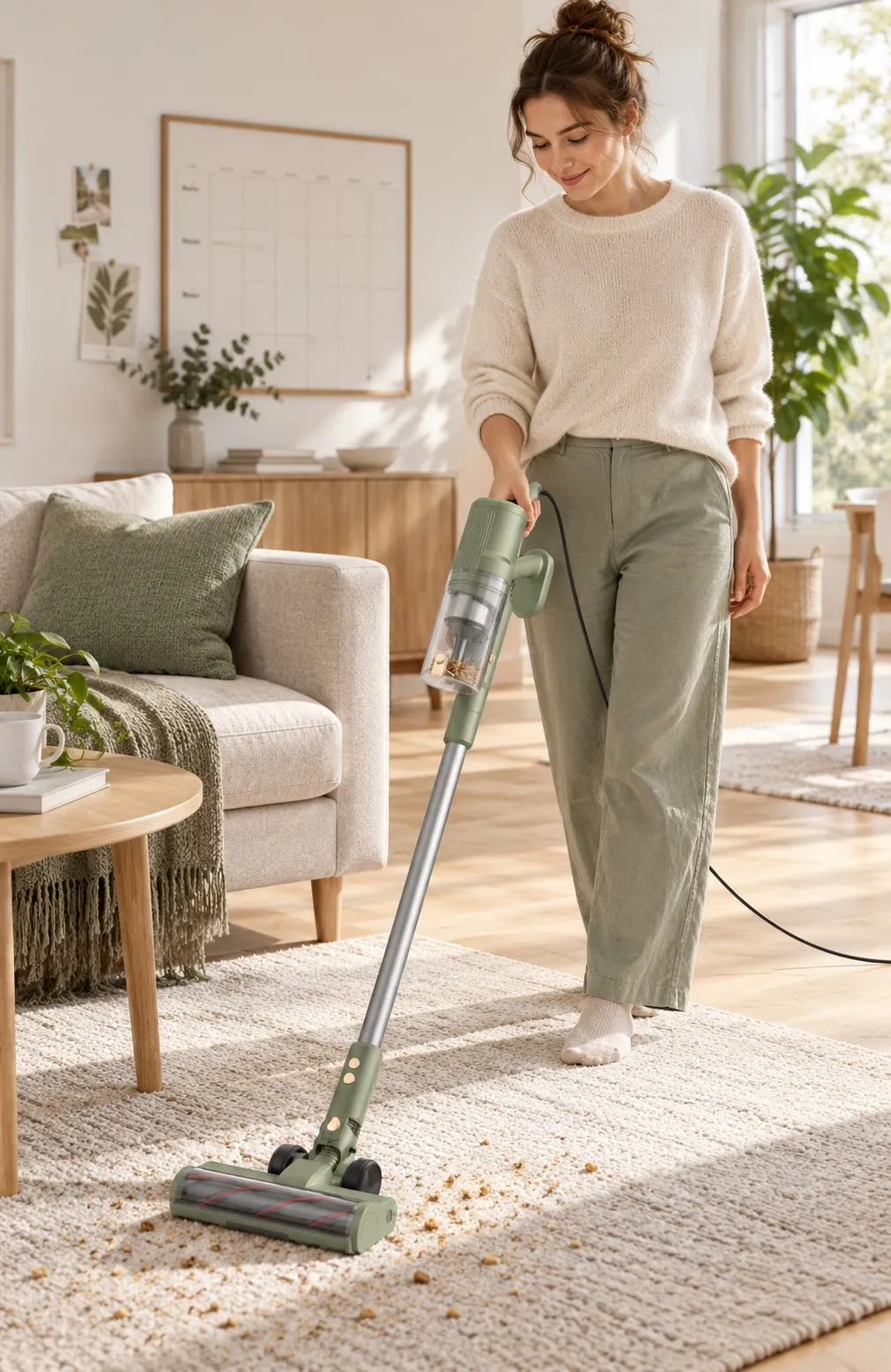
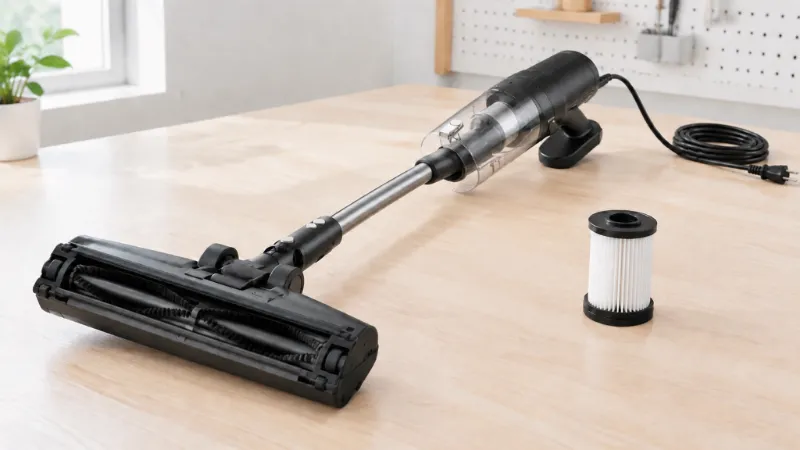
Reach is not just a question of cord length. It includes the tube, the head angle, the space under furniture and the distance between useful outlets. A corded machine can be practical for a whole-home clean because it does not stop for a battery recharge, but the cable must be long enough for the route without becoming difficult to store. Measure the rooms and outlet positions you use most often, then choose a length that fits that routine.
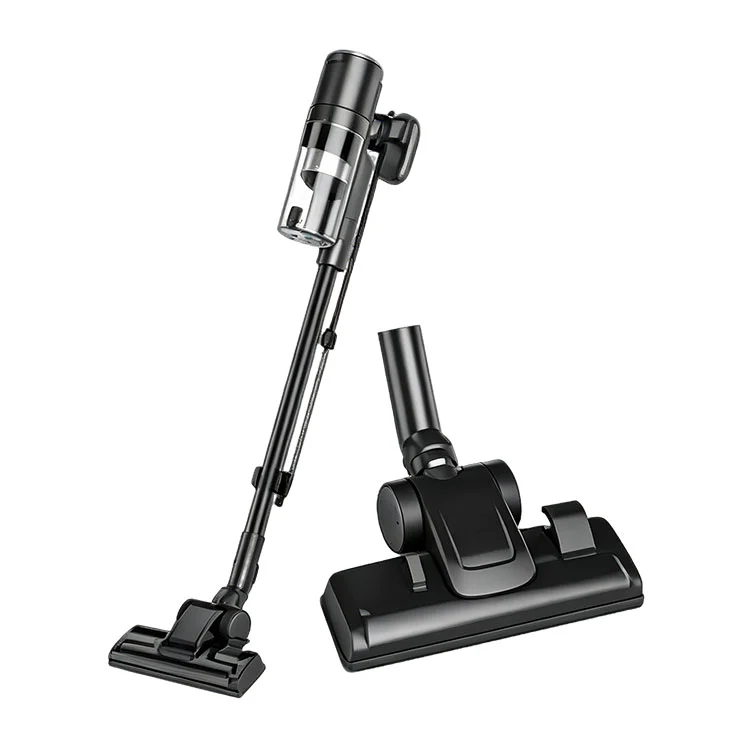
The TEH Corded Stick Vacuum Cleaner platform uses a detachable power cord that can be configured from 5 m to 10 m, with plug, voltage and frequency matched to the destination market. That flexibility helps an importer specify a version for a particular region, but it does not mean the longest cord is always the best retail choice. A shorter, easier-to-manage cable may suit a small apartment, while a longer option can reduce outlet changes in a larger home.
What the Current TEH Platform Specifies?
The current TEH platform uses a 1.2 L transparent PC cyclonic dust cup and H12 HEPA as the standard filter configuration. H13 HEPA can be discussed as a higher-cost customization when a project needs it. The filter is removable for cleaning and service, while the exact care method remains subject to the product instructions. These details give a buyer something concrete to inspect instead of relying on a generic claim about an upright vacuum cleaner.
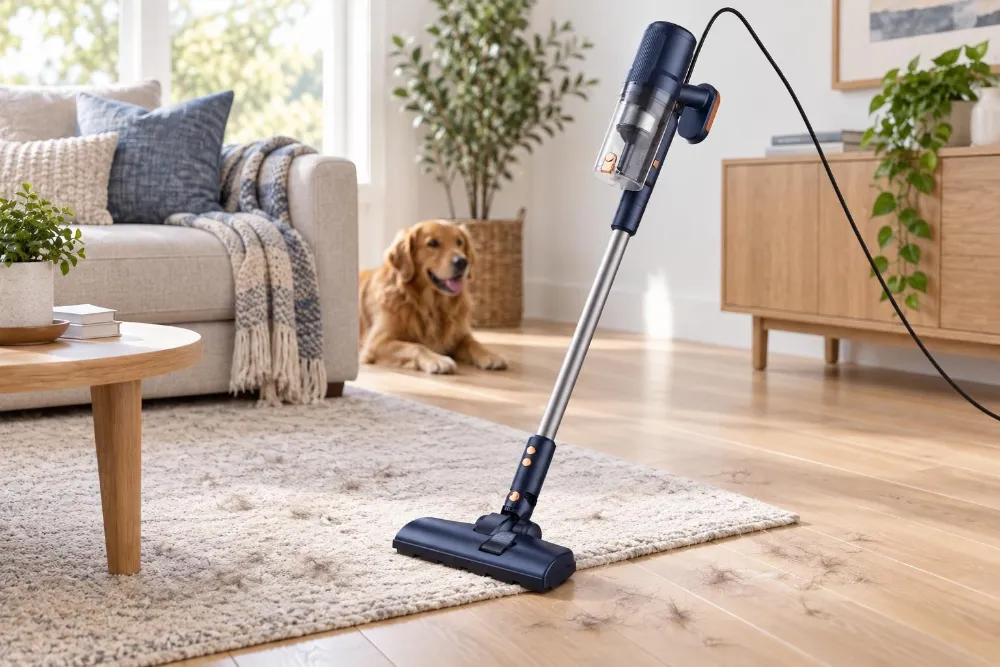
The platform is rated at 270 W, with suction above 25 kPa and noise below 75 dB under the stated test conditions. Those figures describe the documented platform, not every version of every vacuum cleaner. Before a retail listing is written, confirm the floor-head version, cord length, regional electrical configuration and included accessories on the approved sample. The image in this draft is an editorial reference for the cleaning route, not a substitute for the final sample.
A Focused Checklist for Importers and OEM Buyers
When working with a vacuum cleaner manufacturer, ask for one sample that matches the quotation, instruction manual, carton artwork and product photos. Record the intended floor types, head construction, brush or selector mechanism, dust-cup material, filter grade, seal points and replacement parts. If a vacuum cleaner supplier offers several head options, keep each option under a separate configuration code so a buyer does not receive mixed descriptions.
For an OEM vacuum cleaner or private label vacuum cleaner, settle the motor, floor head, filter, cord, plug, voltage, frequency and accessories before discussing colour, logo or packaging. TEH lists a minimum order quantity of 500 units for this platform. Confirm the final specification, electrical version and sample before using technical numbers in consumer-facing copy.
Frequently Asked Questions
What is the best vacuum cleaner for carpet and hard floors?
Choose the model whose head keeps stable contact on both surfaces, turns easily and can be maintained without special effort. Test the transition between floors rather than judging from suction alone.
Do I need a motorized floor head for mixed floors?
Not always. A motorized head can help on carpet, while a well-sealed manual head may suit a simpler setup. Confirm the brush action, floor selector and cleaning instructions for the exact version.
Is a HEPA filter enough to choose a vacuum?
No. Check the filter grade, fit, sealing and replacement plan as a complete system. A label without a defined airflow path does not prove how the machine will perform.
Is a corded vacuum practical for a large home?
It can be, especially when continuous mains power matters more than cordless convenience. Match the cord length and outlet layout to the rooms you clean instead of choosing by length alone.
How do I compare an affordable vacuum cleaner?
Compare the complete ownership routine: floor-head performance, filter and dust-cup care, cord or battery limits, replacement parts and the support available in your market.
Explore TEH Vacuum Cleaner Options
View the TEH Corded Stick Vacuum Cleaner or browse the TEH Vacuum Cleaner range. For a sample, configuration review or OEM discussion, use the Send Inquiry page.
Related News
Leave me a message