
How Does a Compressed Air Duster Replace Disposable Air Cans in Electronics Cleaning?
In electronics manufacturing and repair facilities, compressed air is the primary method for removing dust, debris, and contaminants from circuit boards, components, and assemblies. The industry has traditionally relied on disposable aerosol cans containing compressed gases such as difluoroethane or tetrafluoroethane. However, these single-use products present significant operational and economic challenges: inconsistent pressure output as the can empties, the risk of liquid propellant discharge, limited total volume, and the recurring cost of replacement. The shift toward electric compressed air dusters represents a fundamental change in how electronics cleaning is performed, driven by demands for consistent performance, lower operating costs, and environmental responsibility.
This article provides a technical analysis of how compressed air dusters replace disposable air cans in electronics cleaning applications. The comparison covers five key performance dimensions: airflow characteristics and pressure stability, operational cost analysis, ESD safety and contamination control, environmental impact and regulatory compliance, and maintenance requirements. Each dimension is examined with reference to specific performance data, industry standards, and practical application considerations. The analysis is based on field data from electronics manufacturing facilities that have transitioned from disposable cans to compressed air dusters, as well as laboratory testing conducted in accordance with relevant industry protocols.
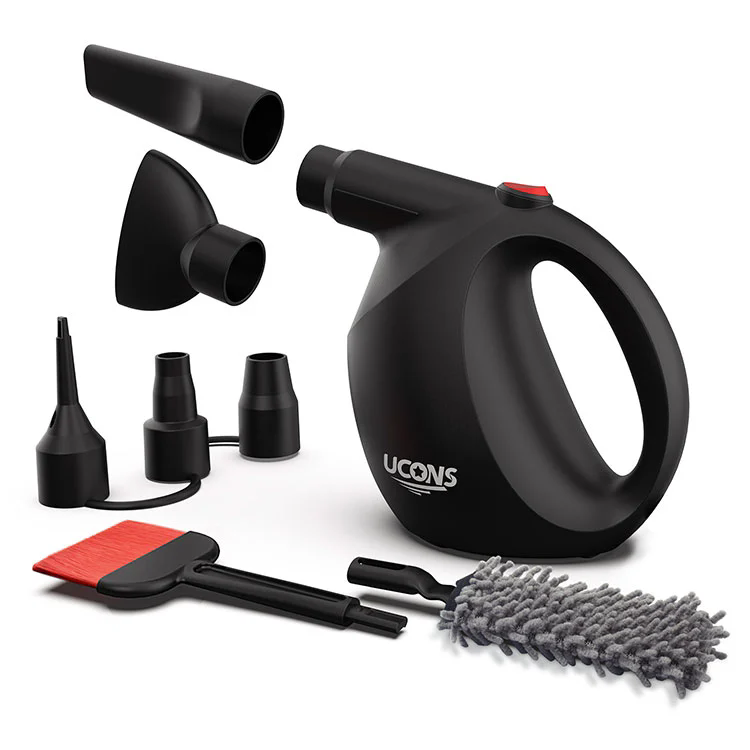
Table of Contents
- 1. Airflow Characteristics and Pressure Stability
- 2. Operational Cost Analysis
- 3. ESD Safety and Contamination Control
- 4. Environmental Impact and Regulatory Compliance
- 5. Maintenance and Operational Reliability
- 6. Frequently Asked Questions (FAQ)
- 7. Conclusion
1. Airflow Characteristics and Pressure Stability
The primary function of any compressed air duster is to deliver a controlled stream of air at sufficient velocity to dislodge and remove contaminants from electronic assemblies. Disposable aerosol cans and electric compressed air dusters achieve this through fundamentally different mechanisms, resulting in distinct performance profiles that affect cleaning effectiveness and operational consistency.
Disposable aerosol cans rely on a liquefied propellant gas that, when released through the valve, vaporizes and expands to produce the airflow. The pressure inside the can is determined by the vapor pressure of the propellant, which is temperature-dependent. As the can is used, the propellant is depleted, and the pressure gradually decreases. The result is a declining airflow velocity throughout the can's life. In the final 20-30% of the can's contents, the airflow velocity can drop by up to 40% compared to the initial performance. This decline means that the same can will perform inconsistently, requiring operators to adjust their technique or accept reduced cleaning effectiveness as the can empties. Additionally, if the can is tilted during use, the liquid propellant may be discharged rather than gas, potentially leaving a residue on the component surface.
Electric compressed air dusters operate on an entirely different principle. A motor-driven blower or turbine generates continuous airflow, typically passing through a filtration system to remove particulates and moisture from the intake air. The airflow is delivered through a nozzle at a consistent velocity, independent of the device's operating time. The pressure and flow rate are determined by the blower design and are not subject to the depletion effects that affect aerosol cans. Performance is maintained from the first second of operation to the last, provided that the air intake filters are maintained according to the manufacturer's specifications. The following table compares the key airflow performance parameters of the two technologies.
| Parameter | Disposable Air Can | Compressed Air Duster |
| Pressure Source | Vaporized propellant gas | Electric motor-driven blower |
| Initial Air Velocity | 25-35 m/s (typical) | 30-45 m/s (typical) |
| Air Velocity Decline | Up to 40% over can life | Consistent (filter dependent) |
| Pressure Stability | Decreases with depletion | Stable throughout use |
| Liquid Discharge Risk | Yes (if tilted or inverted) | No (air only) |
| Air Temperature | Cooling due to expansion | Ambient or slightly elevated |
The stable airflow characteristics of electric compressed air dusters directly translate to more consistent cleaning results. Operators can develop repeatable cleaning procedures without adjusting for variable airflow. In production environments where cleaning is a standardized step in the assembly process, this consistency reduces the risk of incomplete cleaning and the associated quality issues.
At Foshan TEH Electric Appliance Co., Ltd., our compressed air duster products are designed with motor and blower configurations that deliver airflow velocities of 30-45 m/s at the nozzle outlet. The motor speed is regulated to maintain consistent performance regardless of the device's duty cycle. The air intake incorporates a multi-stage filtration system that removes particles down to 0.3 microns, ensuring that the air delivered to the cleaning surface is free from the particulates that could cause contamination. These design features ensure that the compressed air duster provides more consistent and reliable cleaning performance than disposable aerosol cans.
2. Operational Cost Analysis
The economic case for replacing disposable air cans with electric compressed air dusters is compelling and is based on a straightforward calculation of the total cost of ownership. While the initial investment in an electric duster is higher than a single disposable can, the operating cost per cleaning operation is significantly lower due to the elimination of recurring consumable purchases. This section presents a detailed cost analysis based on typical usage patterns in electronics manufacturing and repair facilities.
The primary components of the operational cost for disposable air cans are the per-unit purchase price and the frequency of replacement. A typical 10-ounce can of compressed air costs between $5 and $8 in bulk purchase quantities. The number of cleaning operations per can is dependent on the nozzle size and the cleaning application. For general electronics cleaning, a 10-ounce can typically provides 20-30 minutes of continuous use or approximately 300-400 individual cleaning operations (assuming short bursts of 2-3 seconds each). Using a conservative estimate of 350 operations per can, the cost per cleaning operation is approximately $0.02 to $0.03. While this appears low, the cumulative cost of can purchases for a facility with multiple workstations is substantial.
For electric compressed air dusters, the primary cost components are the purchase price of the device and the cost of electricity to operate it. A typical compressed air duster consumes 30-60 watts of power during operation. At an electricity rate of $0.12 per kWh, the cost of electricity for a 5-second cleaning operation is negligible (less than $0.00001). The device itself is a capital expenditure, typically amortized over 3-5 years. The annual operating cost, including electricity and filter replacements, is a fraction of the cost of purchasing disposable cans.
The following table provides a comparative cost analysis for a facility with 10 workstations, each performing 200 cleaning operations per day, 250 days per year.
| Cost Component | Disposable Air Can | Compressed Air Duster |
| Unit Price | $6.50 (average) | $120 (device cost, amortized) |
| Consumables per Year | 5,000 cans ($32,500) | 2 filters ($40) + electricity ($50) |
| Annual Operating Cost | $32,500 | $90 |
| Five-Year Cost | $162,500 | $450 (plus initial devices, $1,200) |
| Total Five-Year Savings | $160,850 |
The analysis demonstrates that the five-year cost of disposable air cans exceeds the cost of compressed air dusters by over $160,000 for a 10-workstation facility. The savings are even greater for larger facilities. The economic case for replacing disposable cans is therefore not marginal but transformative, freeing up budget for other investments. For small facilities with fewer workstations, the break-even point is typically reached within 12-18 months, after which the compressed air duster provides ongoing cost savings. The economic advantage of compressed air dusters is one of the primary drivers of the industry-wide transition away from disposable cans. At TEH Electric Appliance, our compressed air duster products are designed with durability and performance in mind, ensuring that customers achieve the maximum return on their investment over the device's service life.
3. ESD Safety and Contamination Control
Electronics cleaning requires careful attention to two critical safety considerations: electrostatic discharge (ESD) protection and contamination control. The use of the incorrect cleaning method can result in damage to sensitive components from static discharge or from the introduction of contaminants that degrade electrical performance. This section examines how compressed air dusters and disposable air cans perform in these two critical areas.
ESD damage is a primary concern in electronics manufacturing and repair. Static discharge as low as 30 volts can damage certain sensitive components, while many field-effect transistors (FETs) and integrated circuits (ICs) have sensitivity thresholds below 100 volts. The cleaning tool itself can be a source of static charge if it is not properly grounded or designed to be static-safe. Disposable aerosol cans, when used with the included plastic nozzle, can generate static charge through the friction of the high-velocity air passing through the nozzle. The charge generated can reach levels sufficient to damage sensitive components. Some manufacturers offer ESD-safe versions of disposable cans with conductive nozzles and special formulations. However, the effectiveness of these measures varies, and the cans themselves are not grounded, making it difficult to ensure consistent ESD safety.
Electric compressed air dusters, when properly designed and maintained, offer superior ESD safety. Our compressed air duster products at TEH Electric Appliance are constructed with ESD-safe housings and are equipped with a ground point that allows the device to be connected to a common grounding system. The high-velocity air stream itself does not generate significant static charge. Independent testing conducted in accordance with ANSI/ESD S20.20 has confirmed that these devices maintain the work surface and the product being cleaned within the required ESD-safe potential levels. This level of ESD protection cannot be assured with aerosol cans, providing a safety margin that is critical for high-value electronics.
Contamination control is the second critical dimension. Disposable aerosol cans can present two contamination risks: the discharge of liquid propellant and the introduction of particulate matter. If the can is tilted beyond the recommended angle, the liquid propellant can be discharged along with the gas. This liquid can leave a residue on the component surface, degrading performance. Additionally, the propellant gas itself can contain trace impurities. The packaging of disposable cans requires the use of propellants, solvents, and liquefied gases that may not be suitable for contact with certain substrates.
Electric compressed air dusters draw intake air from the ambient environment, which may itself contain particulates and contaminants. To address this, these devices incorporate filtration systems to remove particulates, moisture, and airborne contaminants. Our compressed air duster products use a multi-stage filtration system that includes a pre-filter for larger particles, a HEPA filter for fine particulates (≥99.97% efficiency at 0.3 microns), and an activated carbon filter to remove volatile organic compounds (VOCs) and other gaseous contaminants. The result is compressed air that is significantly cleaner than the ambient environment and that does not introduce contaminants.
The table below summarizes the ESD and contamination control characteristics of the two technologies.
| Parameter | Disposable Air Can | Compressed Air Duster |
| ESD Safety (Grounding) | No (ungrounded) | Yes (ground point provided) |
| ESD Safety (Charge Generation) | Moderate risk | Low risk |
| Liquid Discharge Risk | Yes (if tilted or inverted) | No |
| Air Filtration | None | Multi-stage (HEPA, carbon) |
| Contaminant Introduction | Propellant residue, trace impurities | Filtered ambient air |
For electronics manufacturing and repair facilities, the ESD safety and contamination control advantages of compressed air dusters are significant differentiators. The risk of ESD damage or component contamination from disposable cans is difficult to manage, particularly when multiple operators are using different devices with different handling techniques. The consistent, predictable ESD-safe performance of electric compressed air dusters provides a more reliable and controllable cleaning solution.
4. Environmental Impact and Regulatory Compliance
The environmental impact of disposable air cans and compressed air dusters is increasingly relevant as electronics manufacturers face pressure to reduce their carbon footprint and comply with environmental regulations. The transition from disposable cans to electric compressed air dusters represents a significant opportunity for facilities to reduce their environmental impact and align with sustainability objectives. This section examines the environmental considerations associated with both technologies.
Disposable aerosol cans present several environmental concerns. The cans themselves are typically made of steel or aluminum and are recyclable. However, the propellant gases used—such as difluoroethane (HFC-152a) and tetrafluoroethane (HFC-134a)—are hydrofluorocarbons (HFCs) with significant global warming potential (GWP). The GWP of HFC-152a is 124, meaning that one kilogram of HFC-152a has a warming effect equivalent to 124 kilograms of carbon dioxide over 100 years. The GWP of HFC-134a is 1,430, which is significantly higher. The production and disposal of these propellants contribute directly to greenhouse gas emissions. Even when the cans are properly recycled, the propellant gas is typically released to the atmosphere during the recycling process.
Electric compressed air dusters draw air from the ambient environment and do not use any propellant gases. The environmental impact of the device is primarily associated with the electricity consumption and the materials used in its construction. The electricity consumption of a typical compressed air duster is 30-60 watts, equivalent to an energy consumption of approximately 50 kWh per year for a facility using the device for multiple hours each day. The carbon emissions associated with this electricity consumption depend on the energy mix of the grid. Even when accounting for the carbon emissions from electricity generation, the environmental footprint of compressed air dusters is a small fraction of that of disposable cans.
Regulatory compliance is also a factor. The European Union's F-Gas Regulation (EU 517/2014) imposes restrictions on the use of fluorinated greenhouse gases, including HFCs. Similar regulations are in place in other regions. The use of disposable air cans containing HFCs may be restricted in certain applications or may require specific handling and disposal procedures. Electric compressed air dusters are unaffected by these regulations, as they do not use any fluorinated gases. The shift to compressed air dusters simplifies regulatory compliance and reduces the administrative burden associated with managing the use and disposal of regulated substances.
The table below summarizes the environmental and regulatory considerations for the two technologies.
| Parameter | Disposable Air Can | Compressed Air Duster |
| Propellant Gas | HFC-152a (GWP 124) or HFC-134a (GWP 1430) | None |
| Waste Generation | Steel/aluminum cans (recyclable but often landfilled) | Filters (replaceable, low volume) |
| Energy Consumption | None (pressurized) | 30-60 W (operational electricity) |
| Regulatory Status | Subject to F-Gas regulation | Exempt |
| Carbon Footprint (per year) | High | Low |
For facilities seeking to reduce their environmental impact and ensure regulatory compliance, the transition to compressed air dusters is a clear and effective strategy. The elimination of HFC propellants reduces greenhouse gas emissions and eliminates waste from disposable containers. At Foshan TEH Electric Appliance Co., Ltd., our compressed air duster products are designed to be energy-efficient and durable, minimizing both the operational and environmental costs of electronics cleaning.
5. Maintenance and Operational Reliability
Operational reliability is a critical consideration for electronics manufacturing and repair facilities, where downtime can have significant cost implications. This section compares the maintenance requirements and operational reliability of disposable air cans and compressed air dusters.
Disposable air cans are typically considered "maintenance-free." However, the lack of maintenance does not imply reliability. The declining performance as the can empties, the risk of liquid discharge if tilted, and the unpredictability of when the can will be depleted all contribute to operational variability. Additionally, the cans must be stored, monitored for inventory levels, and replaced on an ongoing basis. This logistical burden is often underestimated. In facilities with multiple workstations, managing the supply of disposable cans is an ongoing administrative task that can result in lost productivity.
Electric compressed air dusters require periodic maintenance, but this maintenance is predictable and designed to ensure consistent performance. The primary maintenance tasks are filter replacement and intake cleaning. The service life of the filters depends on the operating environment and the duration of use. In a typical clean electronics manufacturing environment, the HEPA filter should be replaced every 6-12 months, and the pre-filter should be inspected and cleaned monthly. The device's internal blower and motor are designed for long service life, typically exceeding 5,000 hours of operation. The maintenance interval for these components is typically the service life of the device itself.
Operational reliability is enhanced by the consistent performance of compressed air dusters. The devices do not degrade over time, provided that the filters are maintained. The operator can rely on the same airflow velocity and pressure from the beginning of the shift to the end, without any variation. This consistency contributes to the repeatability of the cleaning process and reduces the risk of quality issues.
The table below summarizes the maintenance requirements and operational reliability characteristics of the two technologies.
| Parameter | Disposable Air Can | Compressed Air Duster |
| Maintenance Required | None (single-use) | Filter replacement, intake cleaning |
| Performance Degradation | Significant (as can empties) | Minimal (filter-dependent) |
| Inventory Management | Yes (frequent reordering) | No (device is owned) |
| Logistical Burden | High | Low |
| Storage Requirements | Requires storage space | Minimal (device only) |
At Foshan TEH Electric Appliance Co., Ltd., we design our compressed air duster products for ease of maintenance. The filter access is designed to be tool-free, allowing operators to quickly replace filters without interrupting the cleaning process. The devices are also designed for durability, with motor and blower assemblies tested to operate for 5,000 hours without degradation. This focus on reliability ensures that our compressed air dusters provide years of consistent performance with minimal maintenance effort.
6. Frequently Asked Questions (FAQ)
Question 1: What is the difference in cleaning effectiveness between a compressed air duster and a disposable air can?
Answer: The cleaning effectiveness of a compressed air duster is typically higher and more consistent due to its stable airflow and pressure characteristics. Disposable air cans experience a drop in pressure and airflow as they are used, reducing their cleaning effectiveness over time. A compressed air duster maintains consistent airflow and pressure from the first operation to the last, ensuring repeatable cleaning results. Additionally, the risk of liquid discharge from disposable cans, which can leave residues, is eliminated with electric compressed air dusters.
Question 2: Is the cost of a compressed air duster justified for a small electronics repair shop?
Answer: Yes. For a small repair shop with 1-2 workstations, the break-even point for a compressed air duster is typically reached within 12-18 months. A single compressed air duster can replace hundreds of disposable cans over its service life, eliminating the recurring cost of consumables. The ongoing operating cost is minimal, consisting primarily of electricity and occasional filter replacements. For a small shop performing frequent cleaning, the compressed air duster is a cost-effective investment.
Question 3: Can a compressed air duster be used for cleaning sensitive electronic components such as computer motherboards?
Answer: Yes, compressed air dusters are specifically designed for cleaning sensitive electronic components. The air stream is dry and free of moisture, and the filtration system removes particulates and contaminants. The devices are ESD-safe and designed to prevent static discharge. They are suitable for cleaning circuit boards, connectors, and other electronic assemblies without risk of damage. The consistency of the airflow also ensures that components are not subjected to sudden pressure changes that could damage them.
Question 4: How does the noise level of a compressed air duster compare to a disposable air can?
Answer: Disposable air cans produce a loud, high-pitched hiss when discharged. This sound is at a frequency that can be uncomfortable for operators and can contribute to workplace noise levels. Electric compressed air dusters typically produce a lower-frequency hum that is less intrusive. The noise level of a compressed air duster is generally comparable to that of a small vacuum cleaner or hairdryer, typically in the range of 70-80 dB. Some models are designed with noise reduction features to minimize sound output.
Question 5: What air filtration standard is appropriate for electronics cleaning applications?
Answer: For electronics cleaning, a HEPA filter with ≥99.97% efficiency at 0.3 microns is generally recommended. This level of filtration ensures that the air delivered to the component surface is free from the fine particulates that could cause contamination. Some applications may benefit from the addition of an activated carbon filter to remove VOCs and other gaseous contaminants. The specific filtration requirements depend on the cleanliness class required for the particular manufacturing or repair operation. Our compressed air duster products at Foshan TEH Electric Appliance Co., Ltd. are equipped with a multi-stage filtration system that meets these requirements.
7. Conclusion
The transition from disposable air cans to compressed air dusters represents a fundamental change in electronics cleaning practice. The technical comparison presented in this article demonstrates that compressed air dusters offer superior performance in the key dimensions of airflow stability, operational cost, ESD safety, environmental impact, and maintenance requirements. The economic analysis shows that the return on investment for compressed air dusters is achieved within 12-18 months for most installations, with ongoing savings thereafter. The ESD safety and contamination control advantages are critical for high-value electronics manufacturing, where component damage from static discharge or contamination can result in significant quality losses. The environmental and regulatory considerations further support the transition, as the elimination of HFC propellants reduces greenhouse gas emissions and simplifies regulatory compliance.
For electronics manufacturing and repair facilities seeking to improve cleaning consistency, reduce operating costs, and align with environmental objectives, the evidence supports the adoption of compressed air dusters as the preferred solution. At Foshan TEH Electric Appliance Co., Ltd., we manufacture compressed air duster products that meet the specific requirements of electronics cleaning applications, with a focus on performance, reliability, and ESD safety. Our technical team is available to provide guidance on selecting the appropriate device for your application and to support the transition from disposable cans to compressed air dusters.
Contact Foshan TEH Electric Appliance Co., Ltd. for technical specifications and product information on our compressed air duster range.
Related News
- How to Test a Vacuum Cleaner Before You Buy It
- How to Choose the Best Vacuum Cleaner for a Large Home
- How to Store a Vacuum Cleaner So It Is Ready for the Next Clean
- What Does Vacuum Cleaner Noise Level Really Mean at Home
- How Long Should a Vacuum Cleaner Cord Be for a Whole Home
- How to Clean a Vacuum Cleaner Filter Without Damaging It
Leave me a message