
How Does a High-Speed Motor System Improve Blending Performance?
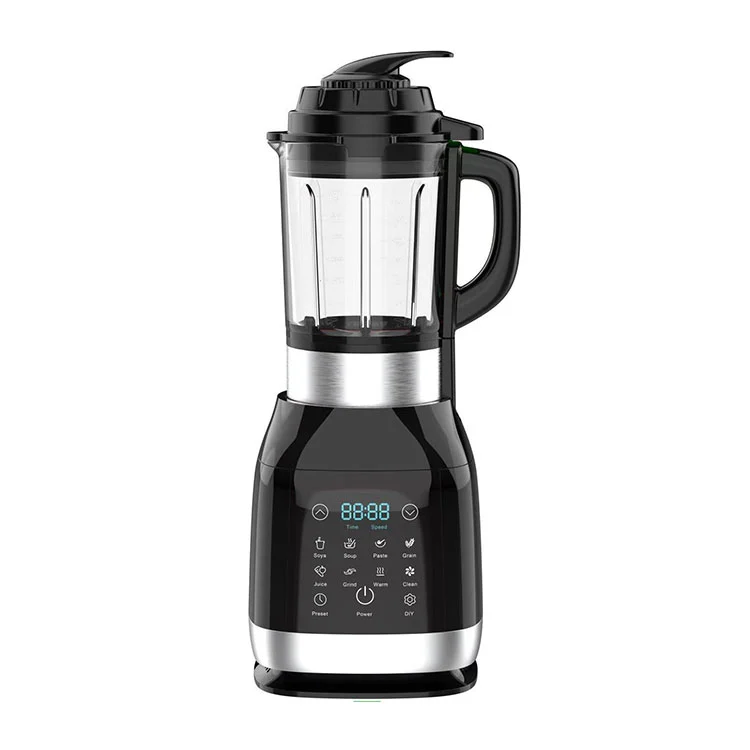
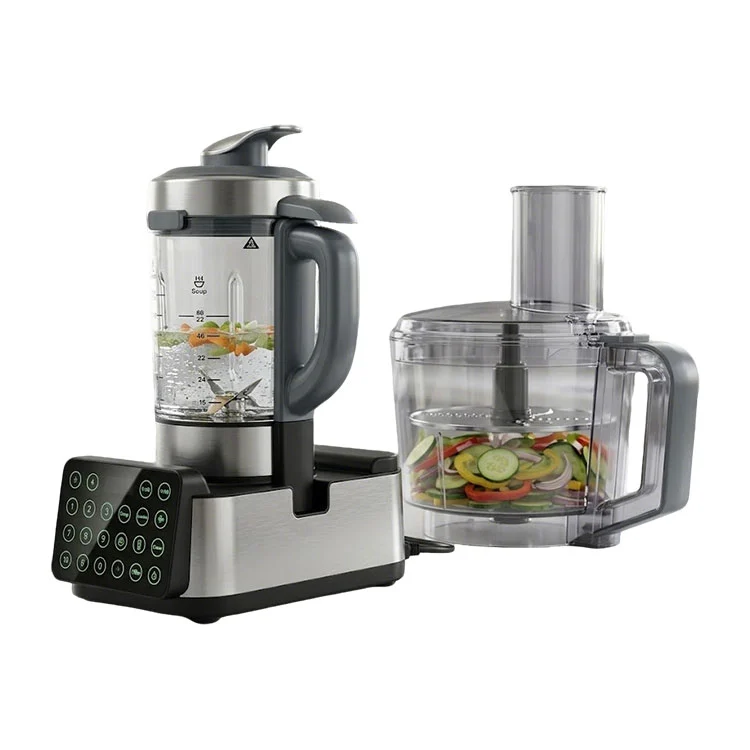
In a professional kitchen, a High-Speed Blender is not a luxury; it is a necessity. Chefs rely on it to create silky smooth sauces, crush ice in seconds, and pulverize fibrous ingredients into velvety purees. The difference between a standard blender and a High-Speed Blender is not just a marketing claim; it is a measurable performance gap that determines whether a recipe succeeds or fails. At the heart of this performance is the motor system. A high-speed motor system does more than spin the blades faster. It generates the torque needed to maintain speed under load, creates a vortex that continuously circulates ingredients into the blade path, and dissipates heat to prevent overheating during extended use. Understanding how a high-speed motor system improves blending performance is essential for anyone who takes blending seriously, from home cooks to commercial food processors.
The question of how a high-speed motor system improves blending performance can be answered at multiple levels. At the most basic level, higher speed means more cutting actions per second, which results in finer and more uniform particle size reduction. But speed alone is not enough. The motor must also deliver sufficient torque to maintain that speed when the blender jar is filled with heavy, dense ingredients. It must be paired with a blade design that can create a strong vortex, pulling ingredients down into the blade zone rather than letting them sit idle on top. And it must be cooled effectively so that it can run for minutes at a time without shutting down. This article will examine each of these factors in detail, providing a comprehensive technical analysis of how a high-speed motor system improves blending performance. We will also provide detailed specifications for our High-Speed Blender products from our factory at Foshan TEH Electric Appliance Co., Ltd.

Table of Contents
- 1. What Is a High-Speed Motor System and How Does It Differ from a Standard Motor?
- 2. Why Does Speed Alone Not Guarantee Blending Performance?
- 3. How Does Torque Affect the Blender's Ability to Handle Heavy Loads?
- 4. What Is the Role of Blade Design and Vortex Generation?
- 5. How Does Thermal Management Affect Continuous Blending Performance?
- 6. What Are the Key Specifications for a High-Speed Blender?
- 7. Frequently Asked Questions (FAQ)
- 8. Conclusion
1. What Is a High-Speed Motor System and How Does It Differ from a Standard Motor?
A high-speed motor system in a High-Speed Blender is an integrated assembly of the motor, the drive electronics, and the cooling system. It is designed to deliver rotational speeds that are significantly higher than those of a standard blender motor. While a standard blender motor might operate at 10,000 to 15,000 RPM, a high-speed motor system can operate at 20,000 to 40,000 RPM or more. This increase in speed is not achieved by simply using a bigger motor. It requires a complete redesign of the motor, the bearings, the shaft, and the control electronics. The motor itself is typically a universal motor or a brushless DC (BLDC) motor. Universal motors are common in lower-cost blenders, while BLDC motors are used in premium models for their higher efficiency, longer life, and quieter operation.
The key differences between a high-speed motor system and a standard motor system are the speed, the power density, and the control precision. A high-speed motor system is designed to deliver a high power output from a compact package. It uses high-quality bearings that can withstand the high rotational speeds without excessive wear. The shaft is precision-machined to minimize vibration. The drive electronics are designed to deliver a smooth, controllable power supply that maintains speed under varying loads. The table below compares the key characteristics of a standard motor system and a high-speed motor system.
| Characteristic | Standard Motor System | High-Speed Motor System |
| Maximum Speed | 10,000 - 15,000 RPM | 20,000 - 40,000 RPM |
| Motor Type | Universal Motor | Universal or BLDC Motor |
| Power Density | Moderate | High |
| Speed Control | Basic (few settings) | Precise (variable speed, electronic control) |
| Cooling | Passive or basic fan | Active cooling with optimized airflow |
| Duty Cycle | Short runs with rest periods | Extended runs with continuous operation |
| Noise Level | Higher | Lower (with BLDC and sound insulation) |
At Foshan TEH Electric Appliance Co., Ltd., our factory designs and manufactures high-speed motor systems for our High-Speed Blender products. We use a combination of universal motors for our standard line and BLDC motors for our premium line. We also design the drive electronics and the cooling system in-house to ensure optimal integration and performance. Our goal is to deliver a motor system that provides the speed, torque, and reliability that professional blending requires.
2. Why Does Speed Alone Not Guarantee Blending Performance?
It is a common misconception that a blender with a higher RPM will always outperform a blender with a lower RPM. While speed is an important factor, it is not the only factor. In fact, a blender that runs at a very high speed but lacks torque will slow down as soon as it encounters resistance. When the blades hit a dense ingredient, such as a chunk of frozen fruit or a handful of fibrous kale, the load on the motor increases. If the motor does not have enough torque to maintain its speed, the blades will slow down, and the blending action will become ineffective. The result is a blender that spins fast in the air but stalls when it hits real food. This is why torque is just as important as speed. A High-Speed Blender must be able to maintain its speed under load.
The relationship between speed, torque, and power is expressed by the equation: Power = Torque × Angular Velocity. To achieve a high power output, a blender needs either high torque or high speed, or both. A high-speed motor system is designed to deliver both. It uses a motor that is optimized for high-speed operation and a drive system that can supply the current needed to maintain torque under load. The table below illustrates the difference between a high-speed, low-torque motor and a high-speed, high-torque motor in a blending application.
| Scenario | Motor Speed (RPM) | Motor Torque (N·m) | Blending Result |
| High-speed, low-torque motor | 30,000 | 0.1 | Stalls on frozen fruit; leaves chunks |
| High-speed, high-torque motor | 30,000 | 0.5 | Maintains speed; creates smooth puree |
| Low-speed, high-torque motor | 10,000 | 0.5 | Blends but takes longer; less smooth |
| Low-speed, low-torque motor | 10,000 | 0.1 | Stalls easily; poor blending performance |
At our factory, we test our High-Speed Blender motors under load to verify their torque characteristics. We use a dynamometer to measure the motor's speed and torque at different load points. This allows us to optimize the motor design and the drive electronics to ensure that the blender maintains its speed even when blending the toughest ingredients. Our High-Speed Blender products are designed to deliver both high speed and high torque, providing the best possible blending performance.
3. How Does Torque Affect the Blender's Ability to Handle Heavy Loads?
Torque is the rotational force that the motor applies to the blade assembly. It is the torque that allows the blades to cut through dense ingredients and maintain their speed. In a High-Speed Blender, the torque is generated by the interaction of the motor's magnetic field and the current flowing through its windings. The amount of torque that a motor can produce is determined by its design, the strength of its magnets, and the current supplied by the drive electronics. A high-torque motor can maintain its speed even when the load increases. A low-torque motor will slow down or stall when it encounters resistance. The table below summarizes the effect of torque on different blending tasks.
| Blending Task | Torque Required | Consequence of Insufficient Torque |
| Crushing Ice | High | Blades stall; ice remains in large chunks |
| Pureeing Frozen Fruit | High | Motor slows; fruit is not fully pulverized |
| Blending Fibrous Greens | Medium-High | Fibers wrap around blades; poor breakdown |
| Making Smoothies | Medium | Lumpy texture; inconsistent blending |
| Mixing Liquids | Low | Adequate for thin liquids |
The ability of a High-Speed Blender to handle heavy loads is directly related to its torque. A blender with high torque can crush ice, puree frozen fruit, and blend fibrous greens without stalling. A blender with low torque will struggle with these tasks. At our factory, we design our High-Speed Blender motors to deliver high torque at all speeds. We use high-strength magnets, precision-wound windings, and advanced drive electronics to ensure that our blenders can handle the toughest ingredients. Our engineering team works closely with our customers to understand their blending requirements and to select the optimal motor for their application.
4. What Is the Role of Blade Design and Vortex Generation?
The blade design is a critical component of a High-Speed Blender. The blades are responsible for cutting, crushing, and pulverizing the ingredients. But the blades do more than just cut; they also create a vortex that circulates the ingredients through the blade zone. A well-designed blade assembly will create a strong vortex that pulls ingredients down from the top of the jar into the blades, ensuring that all the ingredients are processed evenly. A poorly designed blade assembly will create a weak vortex, allowing ingredients to sit on top of the blades without being processed. The vortex is created by the shape and angle of the blades, as well as the speed of rotation. The table below summarizes the key blade design parameters and their impact on vortex generation.
| Blade Parameter | Impact on Vortex Generation |
| Blade Angle | Steeper angles create a stronger downward pull |
| Blade Shape | Curved blades create a smoother vortex |
| Number of Blades | More blades create a more uniform vortex |
| Blade Material | Hardened stainless steel maintains sharpness |
| Blade Assembly Height | Lower blades create a stronger vortex at the bottom |
At TEH, our factory designs and manufactures blade assemblies for our High-Speed Blender products. We use advanced computer-aided design (CAD) software to model the blade geometry and simulate the vortex generation. We also use high-strength stainless steel for our blades to ensure that they remain sharp and durable. Our blade assemblies are designed to create a strong, consistent vortex that pulls ingredients into the blade zone for thorough blending.
5. How Does Thermal Management Affect Continuous Blending Performance?
Thermal management is a critical but often overlooked factor in the performance of a High-Speed Blender. The motor generates heat as it operates, and the amount of heat generated is proportional to the load and the duration of operation. If the heat is not dissipated effectively, the motor will overheat, and the blender will shut down. This is particularly problematic in commercial settings, where the blender may be used continuously for extended periods. A high-speed motor system must be designed with an effective thermal management system to ensure that it can operate continuously without overheating. The thermal management system typically includes a cooling fan, ventilation slots, and a heat sink. The table below summarizes the key thermal management components and their functions.
| Component | Function | Impact on Performance |
| Cooling Fan | Forces air over the motor | Reduces motor temperature |
| Ventilation Slots | Allow hot air to escape | Prevents heat buildup |
| Heat Sink | Absorbs and dissipates heat | Extends continuous operation time |
| Thermal Cutoff | Shuts off motor if overheated | Prevents damage |
| Motor Insulation | Resists high temperatures | Protects windings |
At our factory, we design our High-Speed Blender motors with a comprehensive thermal management system. We use high-efficiency cooling fans and optimized ventilation paths to ensure that the motor stays cool even during extended use. We also incorporate thermal cutoff switches to protect the motor from damage in the event of overheating. Our engineering team can provide detailed thermal performance data for our High-Speed Blender products.
6. What Are the Key Specifications for a High-Speed Blender?
The key specifications for a High-Speed Blender include the motor power, the maximum speed, the torque, the blade design, the jar capacity, and the thermal management system. The table below provides a summary of the typical specifications for our High-Speed Blender products.
| Specification | Range | Notes |
| Motor Power | 800 - 2,500 W | Higher power for heavier loads |
| Maximum Speed | 20,000 - 40,000 RPM | Higher speed for finer blending |
| Torque | 0.3 - 0.8 N·m | Higher torque for frozen and fibrous ingredients |
| Blade Design | 4 - 8 blades, stainless steel | More blades for stronger vortex |
| Jar Capacity | 1.5 - 3.0 L | Larger jars for batch blending |
| Speed Control | Variable speed with preset programs | Precise control for different tasks |
| Thermal Management | Active cooling with thermal cutoff | Ensures continuous operation |
| Noise Level | 80 - 95 dB | Lower noise for quieter operation |
At Foshan TEH Electric Appliance Co., Ltd., our factory manufactures High-Speed Blenders with a range of specifications to suit different applications. We can customize the motor power, speed, torque, blade design, and jar capacity to meet the specific requirements of our customers. Our engineering team can provide technical data and product samples for evaluation.
7. Frequently Asked Questions (FAQ)
Question 1: What is the difference between a high-speed blender and a standard blender?
Answer: A High-Speed Blender operates at a much higher speed (20,000-40,000 RPM) than a standard blender (10,000-15,000 RPM). It also has a more powerful motor, a more efficient cooling system, and a more advanced blade design. This allows it to handle tougher ingredients, produce smoother results, and operate for longer periods without overheating.
Question 2: Does a higher speed always mean better blending performance?
Answer: No, higher speed alone does not guarantee better blending performance. The motor must also have sufficient torque to maintain its speed under load. A high-speed, low-torque motor will stall when it encounters dense ingredients. A High-Speed Blender with both high speed and high torque will deliver superior blending performance.
Question 3: How does torque affect the blender's ability to crush ice?
Answer: Crushing ice requires high torque because ice is hard and dense. If the motor does not have enough torque, the blades will stall, and the ice will remain in large chunks. A High-Speed Blender with high torque can crush ice quickly and efficiently, producing fine, snow-like ice for smoothies and desserts.
Question 4: What is a vortex and why is it important in blending?
Answer: A vortex is the circular motion of the ingredients in the blender jar. It is created by the action of the blades and is important because it circulates the ingredients through the blade zone. A strong vortex ensures that all the ingredients are processed evenly, while a weak vortex allows ingredients to sit on top of the blades without being blended.
Question 5: Can I use a High-Speed Blender for commercial purposes?
Answer: Yes, High-Speed Blenders are designed for both home and commercial use. Commercial High-Speed Blenders are built with more robust motors, more effective cooling systems, and more durable components to withstand the demands of continuous operation in a commercial kitchen. Our factory manufactures High-Speed Blenders for both markets.
8. Conclusion
A high-speed motor system improves blending performance through a combination of speed, torque, blade design, and thermal management. Speed increases the number of cutting actions per second, while torque ensures that the motor can maintain its speed under load. Blade design creates the vortex that circulates ingredients through the blade zone. And thermal management ensures that the motor can operate continuously without overheating. Together, these factors determine the performance of a High-Speed Blender and its ability to handle the toughest blending tasks. At Foshan TEH Electric Appliance Co., Ltd., our factory has the expertise and the equipment to design and manufacture High-Speed Blender motor systems that meet the most demanding requirements. We use high-quality materials, precision manufacturing processes, and rigorous testing to ensure that every blender we produce delivers reliable performance and long service life.
Whether you are a consumer looking for a High-Speed Blender for your home kitchen or a commercial food processor seeking a reliable appliance for your business, we invite you to contact us to discuss your requirements. We can provide detailed product specifications, technical support, and application guidance. Our commitment to quality and customer satisfaction has made us a trusted partner for businesses around the world.
Contact Foshan TEH Electric Appliance Co., Ltd. today to discuss your High-Speed Blender requirements and discover how our motor systems can improve your blending performance.
Related News
- How to Test a Vacuum Cleaner Before You Buy It
- How to Choose the Best Vacuum Cleaner for a Large Home
- How to Store a Vacuum Cleaner So It Is Ready for the Next Clean
- What Does Vacuum Cleaner Noise Level Really Mean at Home
- How Long Should a Vacuum Cleaner Cord Be for a Whole Home
- How to Clean a Vacuum Cleaner Filter Without Damaging It
Leave me a message