
What Does Vacuum Cleaner Noise Level Really Mean at Home
Understand vacuum cleaner noise level claims, test conditions, floor-head sound and what a family can actually hear.
Vacuum cleaner noise level is useful only when you know how it was measured. A number from a motor test may not match the sound of the floor head on carpet, the air rushing through a partly full cup or the echo in a small room. Use the published figure as a comparison point, then ask about test conditions and listen to the complete machine.
The useful answer is usually a sequence of small checks rather than one dramatic specification. Walk through the routine below, then test the exact configuration if you are buying for a retail programme. Keep a short written record of the floor, head, filter, power version and anything that changed during the route; it will make the final decision easier to explain.
Read the test condition before the decibel number
A figure such as below 75 dB needs a documented distance, room, floor head and operating state. Sound measured beside a bare motor cannot be compared directly with a complete vacuum moving over carpet. Ask whether the cup was empty, which head was fitted and how far the microphone was placed. Without that context, two numbers that look close may describe different tests.
The floor head has its own sound
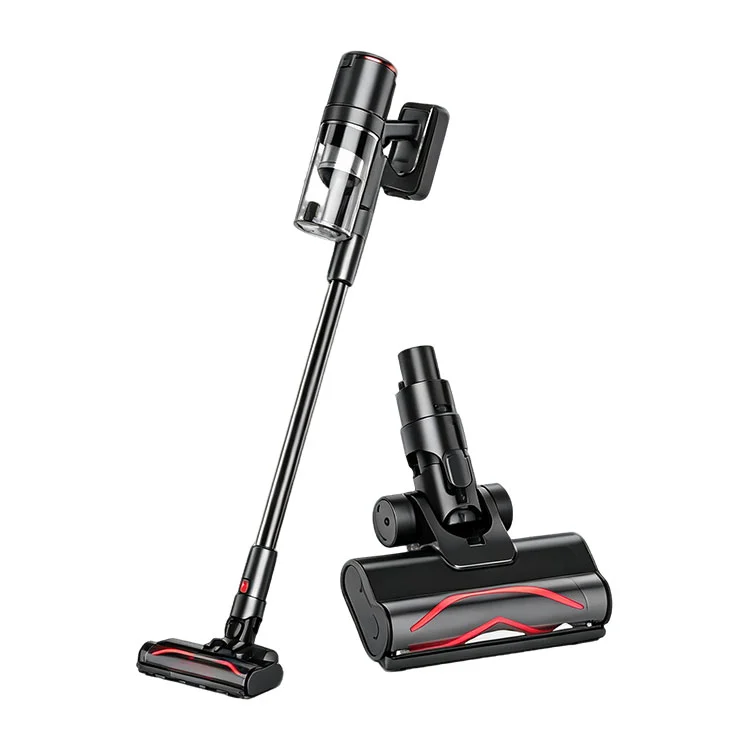
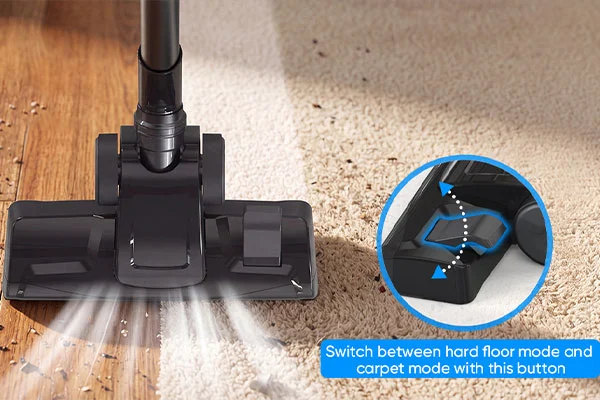
A motorized roller adds brush contact, bearings and wheel noise. It may sound different on timber, tile, a low-pile rug and a thick carpet even when the motor setting is unchanged. Listen for a steady mechanical sound rather than a rattle, scrape or repeated knock. A sudden change at one floor transition may point to poor contact or debris in the head, not a change in motor quality.
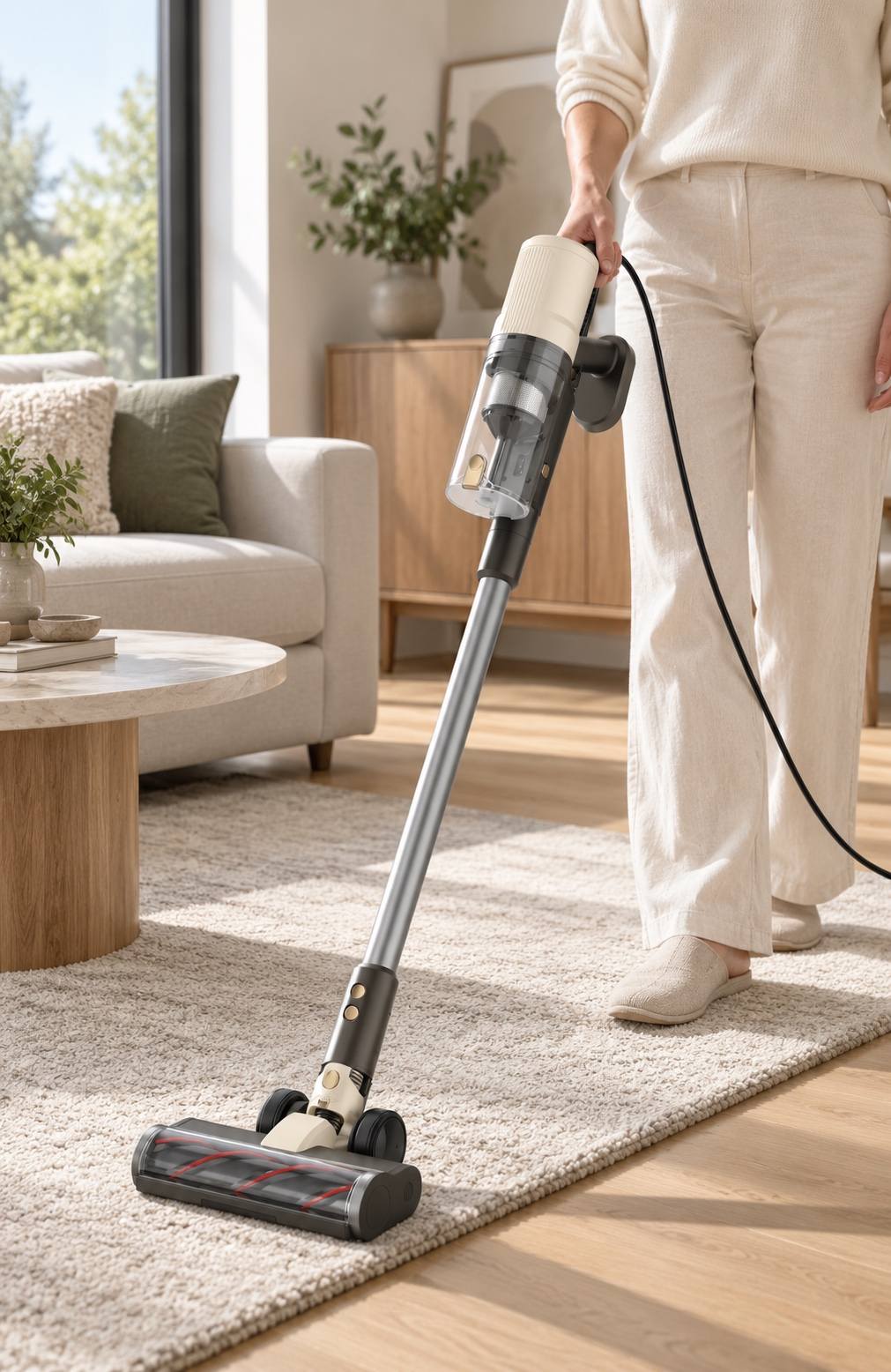
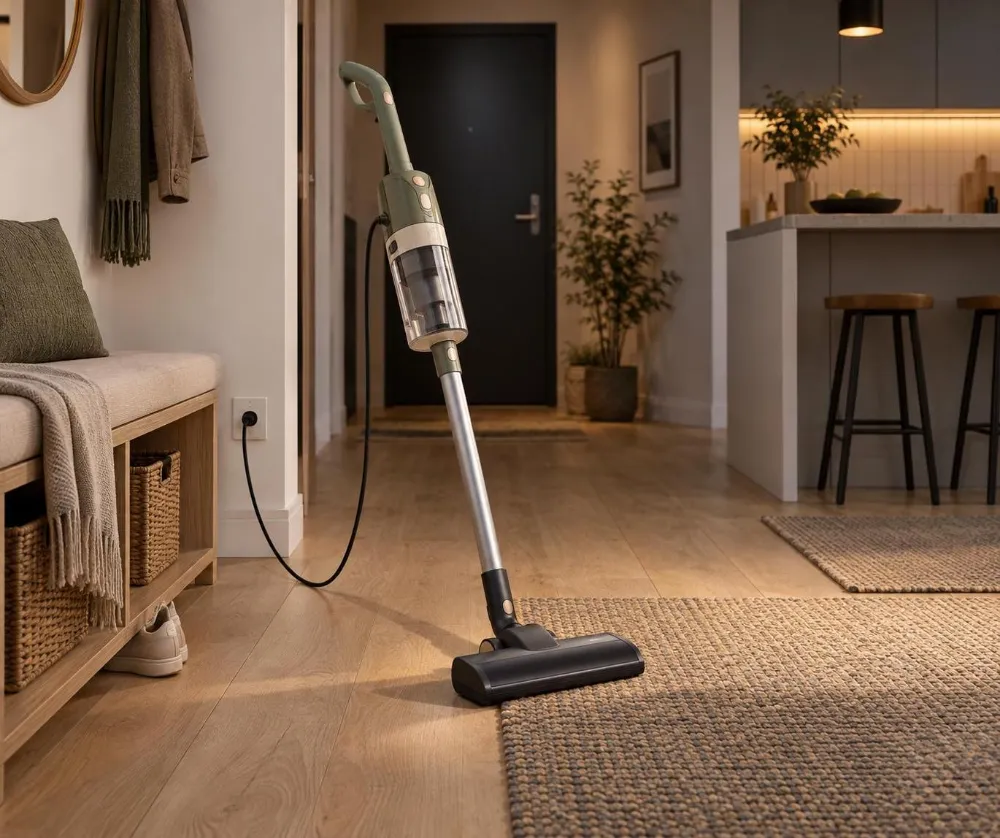
Figure 1 | Test noise level in the real cleaning route.
Noise changes when airflow is restricted
A partly blocked inlet, packed cup or loaded filter can change pitch before the user notices weaker pickup. Stop, unplug and inspect the airflow path if the machine begins to sound strained. Emptying the cup and servicing the approved filter can be a better response than switching to a higher setting. Noise is therefore also a maintenance signal, not only a comfort figure.
Room acoustics affect what a family hears
Hard walls and an empty hallway reflect sound; curtains, sofas and carpet absorb part of it. A sample that seems comfortable in a furnished living room may feel sharper in a tiled kitchen. Test at the times and places the product will normally be used, while keeping children and pets safely away from the cable. The goal is a realistic expectation, not a laboratory number copied without context.
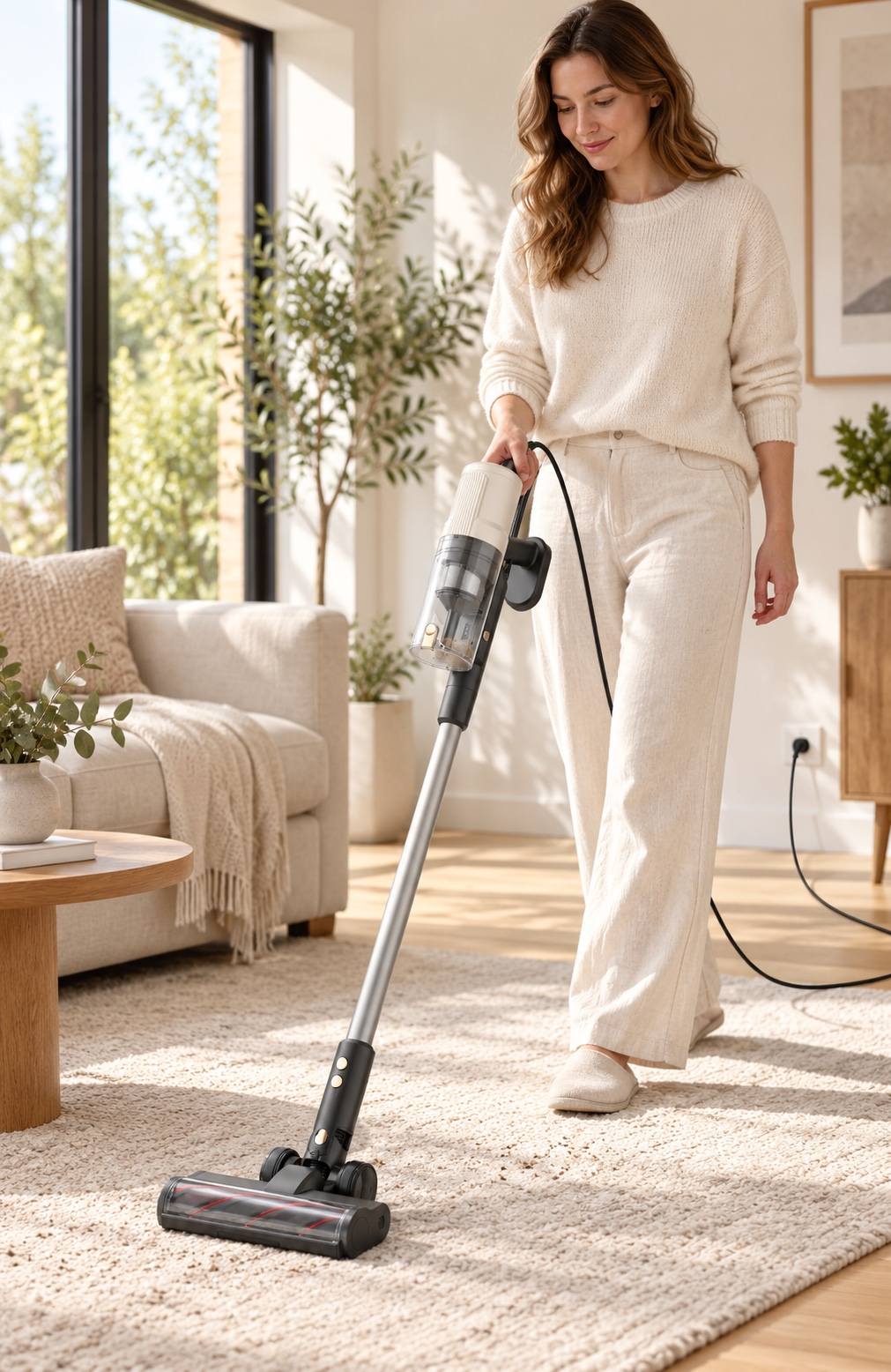
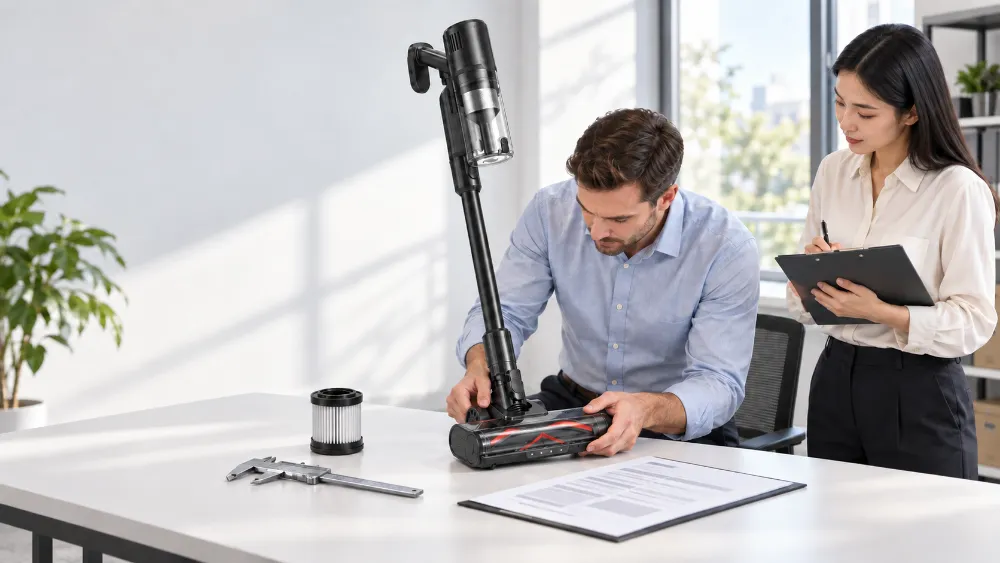
Figure 2 | Check the final product configuration before making a claim.
Compare sound and cleaning together
A quiet pass that leaves debris behind is not automatically better, and a louder pass is not proof of stronger pickup. Use the same dry debris, floor area, head and number of passes for each sample. Record both visible residue and sound. This helps an importer decide whether a change to the floor head, seal or control setting improves the complete experience.
Write retail copy that keeps the condition
If a product page mentions vacuum cleaner noise level, keep the stated test condition and avoid words such as silent or whisper-quiet unless those claims have their own support. The approved sample, test report, manual and packaging should use the same version. A destination plug or floor-head change can create a new configuration that deserves another check.
Where the TEH platform fits
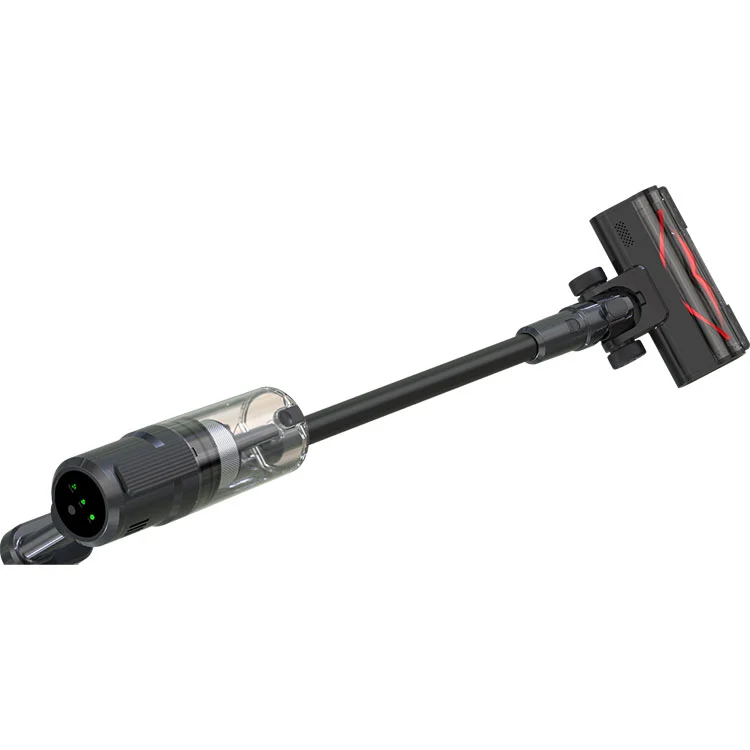
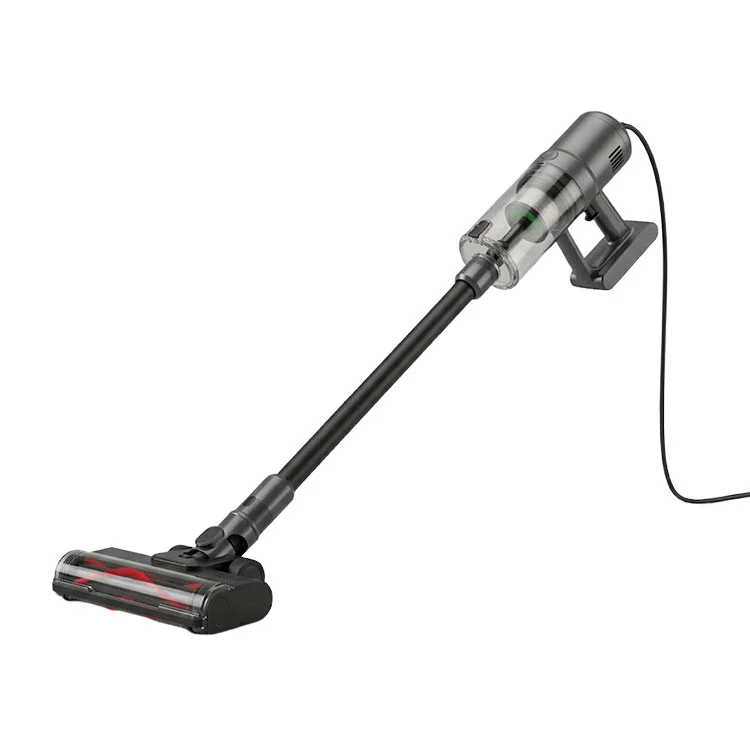
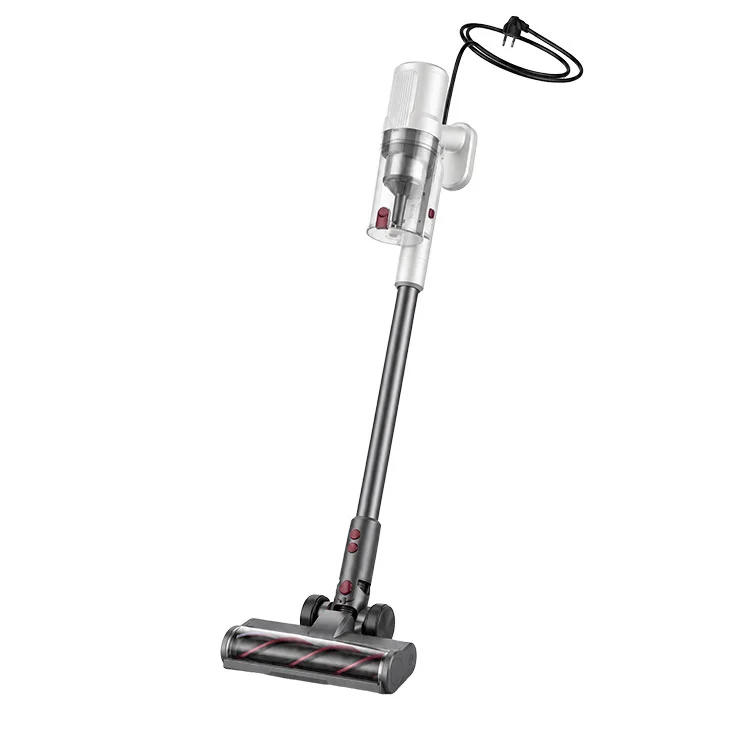
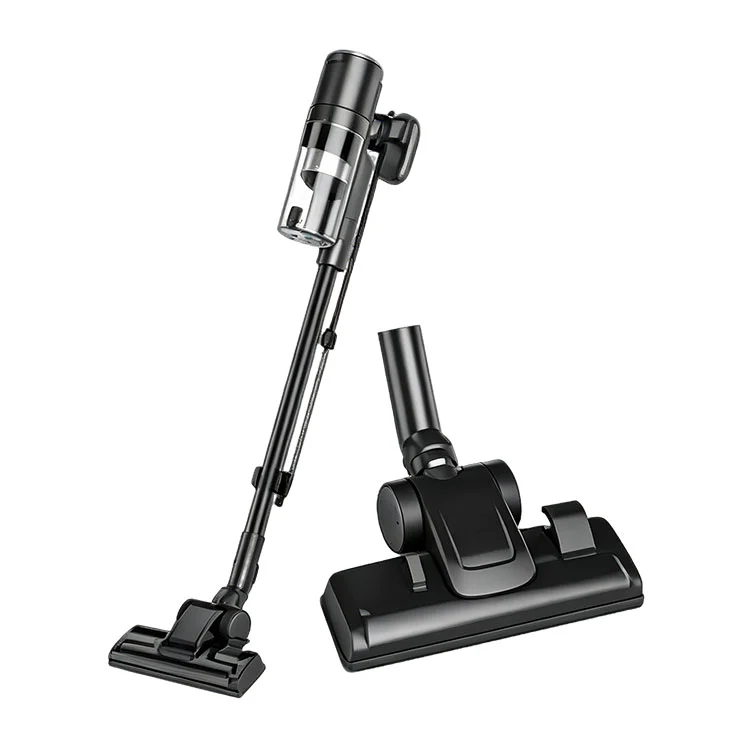
The documented TEH Corded Stick Vacuum Cleaner platform uses a 270 W high-voltage DC brushless motor, suction above 25 kPa and noise below 75 dB under the stated test conditions. It has an independently powered motorized roller floor head, a 1.2 L transparent PC cyclonic dust cup and H12 HEPA as standard. H13 HEPA is available as a higher-cost customization. The detachable power cord can be specified from 5 m to 10 m with destination-specific plug, voltage and frequency.
For repeated home cleaning, the platform can be specified around the floor, cord route and destination market. The product section should still be read with the stated test conditions: a floor head, carpet, filter and user routine can change the experience. Treat the generated colour as an editorial concept until the factory confirms the production finish.
For importers and OEM buyers
A vacuum cleaner manufacturer or vacuum cleaner supplier should keep the approved sample, quotation, specification, instruction manual, packaging and online copy aligned. For an OEM vacuum cleaner or private label vacuum cleaner, record the final floor head, dust cup, filter grade, cord length, plug, voltage, frequency and replacement parts before launch. If a claim depends on a specific floor or test method, keep that condition in the internal file instead of turning it into an absolute promise.
Frequently Asked Questions
What is a good vacuum cleaner noise level? A useful number is one measured on the complete product under stated conditions. Comfort still depends on the room and floor.
Why does a vacuum suddenly sound louder? Check the inlet, cup, filter and roller after switching off and unplugging. A blockage can change the pitch.
Can two decibel claims be compared directly? Only when the measurement distance, room, floor head and operating state are comparable.
Explore TEH Vacuum Cleaner Options
View the TEH Corded Stick Vacuum Cleaner or browse the TEH Vacuum Cleaner range. For a sample or configuration discussion, use the Send Inquiry page.
Related News
- How to Test a Vacuum Cleaner Before You Buy It
- How to Choose the Best Vacuum Cleaner for a Large Home
- How to Store a Vacuum Cleaner So It Is Ready for the Next Clean
- How Long Should a Vacuum Cleaner Cord Be for a Whole Home
- How to Clean a Vacuum Cleaner Filter Without Damaging It
- What to Look for in a Vacuum Cleaner for High-Pile Carpet?
Leave me a message