
Cordless Vacuum Battery Problems and Brushed Motor Complaints Explained
Complaints about a vacuum that will not charge, loses runtime, smells hot or starts intermittently are often grouped together. They should not be. Cordless vacuum battery problems begin in the battery, charger or protection electronics, while a corded machine with a brushed motor has a different wear path in its carbon brushes and commutator. A burning odor can also come from a blocked airway, stalled roller or slipping belt. This analysis uses public recall records, motor-manufacturer guidance and clearly labelled consumer symptom reports to explain what each sign can mean without treating isolated cases as an industry-wide failure rate.
What the Public Recall Records Actually Show?
The strongest evidence comes from official safety records. In a 2024 BISSELL recall, the U.S. Consumer Product Safety Commission recorded 17 reports of recalled vacuums smoking or emitting a burning odor. Six involved a battery pack catching fire; three caused minor property damage and two caused minor burns. A 2026 Rowenta recall listed two U.S. reports of a lithium-ion battery overheating or not charging and 65 additional reports worldwide, with no injuries reported.
UK product-safety notices describe the same failure family from another angle. A GTech handheld-vacuum battery could overheat and ignite while charging, while a BISSELL cordless wet-dry model had a battery circuit board that could develop a localised hot spot. These records prove that battery heat events are real and deserve clear stop-use instructions. They do not prove that every cordless vacuum cleaner is unsafe, nor do they provide a category-wide complaint rate.
How Cordless Battery Complaints Differ?
Shorter runtime is usually the first complaint people associate with cordless vacuum battery life. Capacity declines with age and use, and cold storage, high operating heat or repeated deep discharge can make the loss more noticeable. That is an ownership-cost issue, not automatically a safety event.
A vacuum battery not charging is a separate symptom. The battery, charger, connector, temperature protection or control electronics may be involved. Users should confirm the correct charger and follow the manufacturer's troubleshooting path, but they should not open a lithium-ion pack. For a cordless vacuum battery replacement, model number, date code, electrical compatibility and an authorised supply route matter more than a pack that merely fits the housing.
Abnormal heat, swelling, hissing, smoke or a sharp burning odor belongs in a higher-risk category. Stop using and charging the product, disconnect power when it is safe to do so, move away from the unit and follow the recall or manufacturer instructions. A damaged or recalled lithium-ion battery should not be placed in household trash or an ordinary retail battery box.
Why Brushed Corded Motors Lead to Different Complaint Patterns?
Many corded vacuums use an AC commutator motor. Nidec lists electric vacuum cleaners as an application and identifies carbon-brush service life as a limitation of this motor type. The brushes maintain electrical contact with the rotating commutator, so physical wear is part of the design. As the parts age or make poor contact, consumers may report more visible sparking, a rougher sound, intermittent starting, reduced speed or an electrical smell.
A vacuum motor brush replacement is therefore a plausible service event on a brushed design, but it is not a diagnosis that should be made from a search result alone. The correct carbon brush for a vacuum motor must match the motor and service procedure. Continued arcing, heat or odor can damage the commutator or insulation, so the safe response is to stop the machine and use qualified service rather than keep running it to see whether the smell clears.
A Burning Smell Is a Symptom, Not a Diagnosis
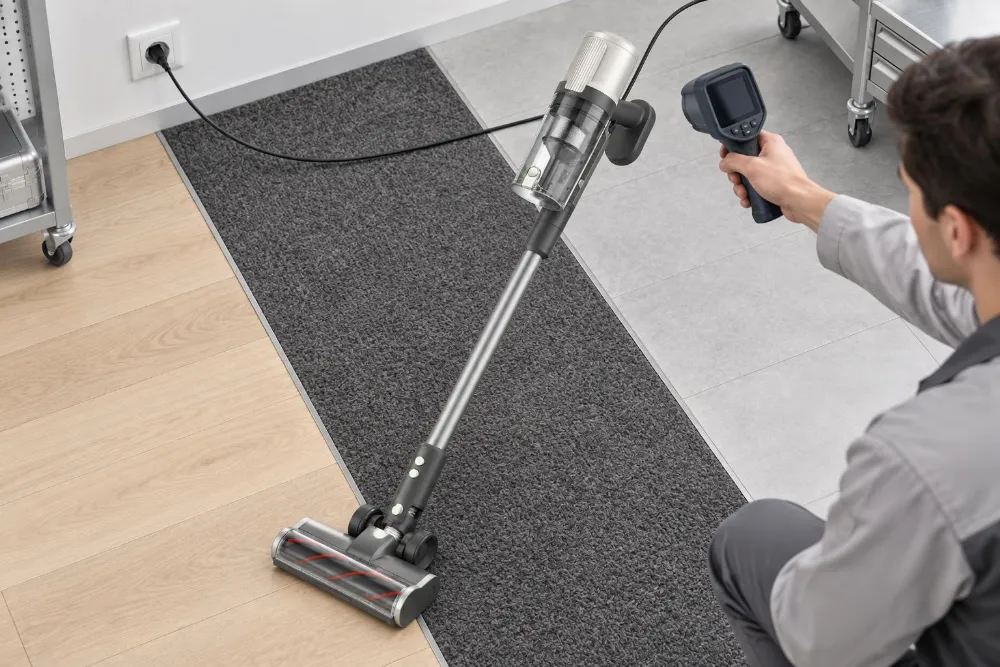
The phrase vacuum cleaner burning smell does not identify one failed part. A jammed brush roll can stall or overheat a belt; a clogged filter can restrict cooling airflow; hair can load the floor head; and a damaged cord, switch, connector or circuit board can also create heat. Because several paths create a similar odor, the location, timing and visible signs must be checked before blaming the main motor.
Battery, Brushed or Brushless: The Real Trade-off
| Architecture | Practical benefit | Typical complaint path | What to verify |
| Cordless lithium-ion | No power cord while cleaning | Battery aging, charging faults, heat events, replacement availability | Battery identity, charging controls, replacement route and recall process |
| Corded brushed motor | Continuous mains power and familiar motor design | Carbon-brush wear, commutator wear, sparks, noise or intermittent running | Brush access, motor cooling, overload protection and service plan |
| Corded brushless motor | No rechargeable battery pack and no motor carbon brushes | Electronics, bearings, cord, filter and floor-head faults still remain | Driver protection, thermal tests, cord durability and complete-machine validation |
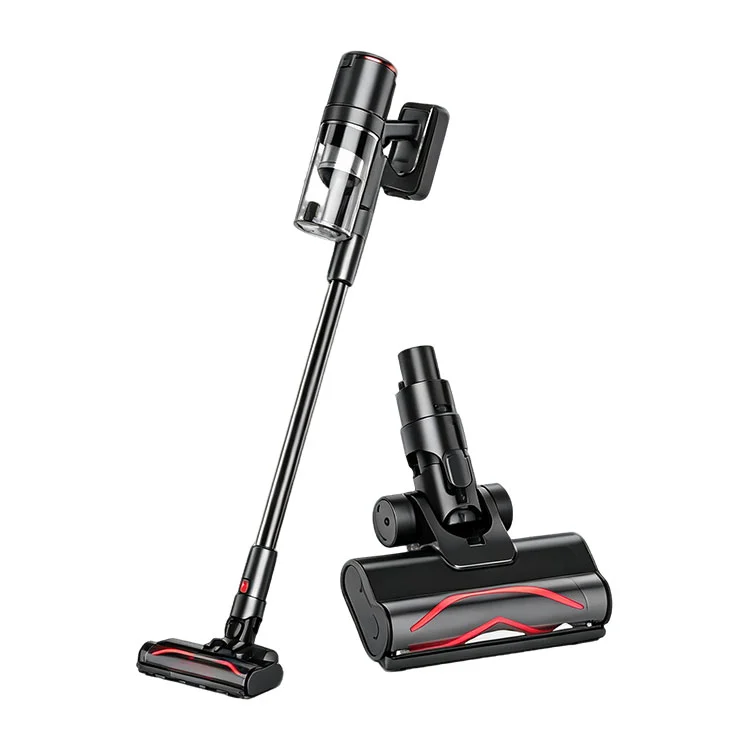
In a brushless motor vacuum cleaner, the motor itself has no carbon-brush or commutator wear path. If it is also corded, it does not need a rechargeable lithium-ion battery pack to power the main vacuum. That is a meaningful architecture choice, but it does not make the whole machine maintenance-free. Driver electronics, bearings, the power cord, filters, seals and the motorized floor head still need validation.
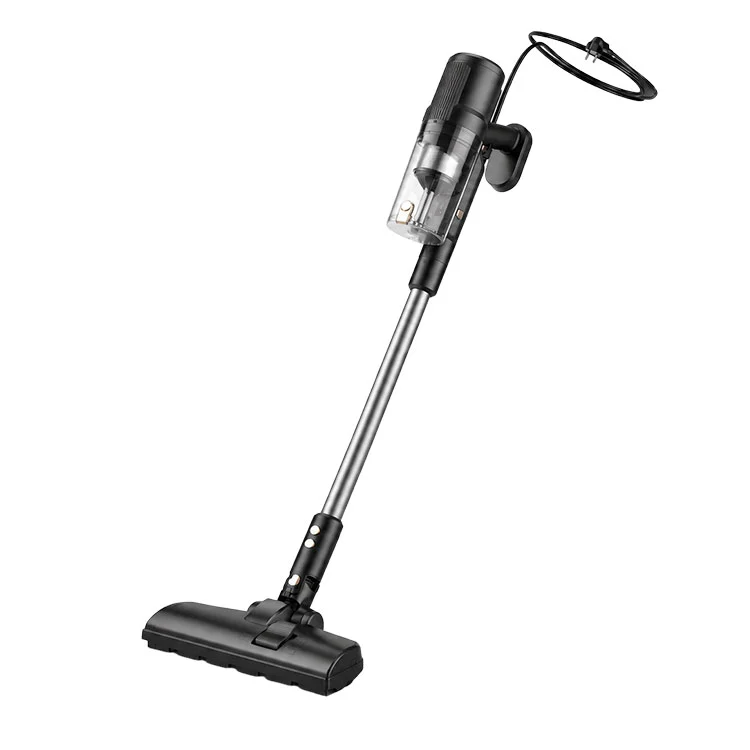
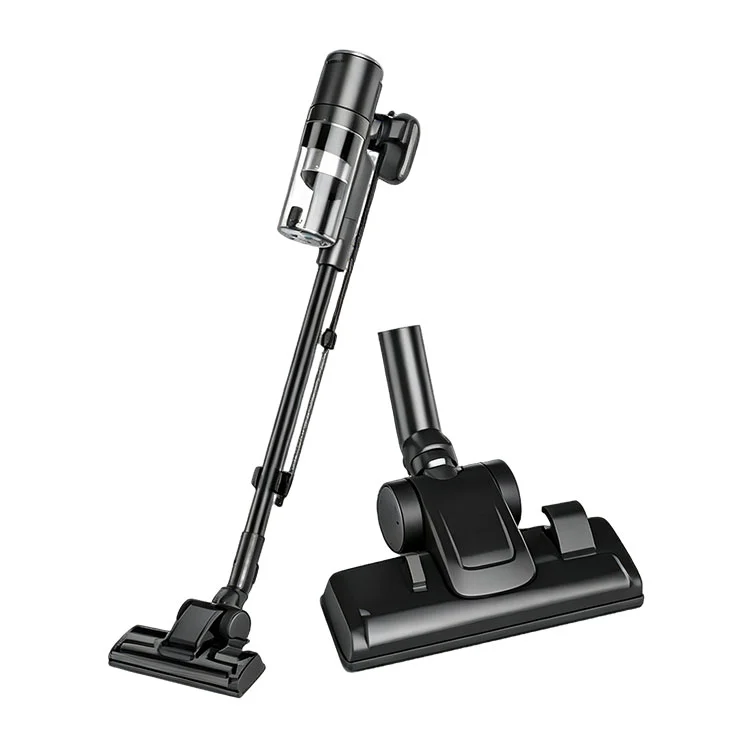
The TEH Corded Stick Vacuum Cleaner platform uses a 270 W high-voltage DC brushless motor, suction above 25 kPa under stated test conditions and an independently driven motorized roller head. Its documented motor running life is above 500 hours. Those are platform specifications, not a promise that every assembled vacuum will have the same service life; the final cord, controller, airflow path, filter and floor head must be tested as one approved sample.
What Consumers Should Check Before Buying?
For a cordless model, ask whether the battery is removable, how long a replacement will be sold, what warranty applies to the pack and charger, and how a recalled or damaged battery is returned. For a corded vacuum cleaner, ask whether the motor is brushed or brushless, whether overload protection is included, how the cord is strain-relieved, and which parts can be serviced. In either case, check filter cost, roller access and the availability of a real after-sales route.
What Importers and OEM Buyers Should Validate?
A vacuum cleaner manufacturer or vacuum cleaner supplier should trace a complaint to a subsystem instead of labelling every case “motor failure.” For an OEM vacuum cleaner or private label vacuum cleaner, record battery and charger identities where applicable, motor type, thermal protection, cord construction, controller version, filter loading, roller-stall behaviour and replacement-part policy. Run the final sample across its target surfaces, then keep the approved configuration tied to production and retail copy.
Frequently Asked Questions
Are cordless vacuum battery problems always dangerous?
No. Gradual runtime loss is different from abnormal heat, swelling, smoke or fire. The latter signs require immediate stop-use action and manufacturer or recall guidance.
Why is my vacuum battery not charging?
Possible causes include the charger, contacts, temperature protection, battery electronics or aged cells. Use the correct charger and the maker's diagnostic process; do not open the pack.
Does a vacuum cleaner motor burning smell mean worn carbon brushes?
Not necessarily. Brushes are one possibility on a brushed motor, but belts, blockages, rollers, cords, switches and electronics can create similar odors.
Is a brushless corded vacuum maintenance-free?
No. It does not need a rechargeable battery pack and has no motor carbon brushes, but filters, bearings, electronics, the cord and floor head still require sound design and maintenance.
Review the TEH Corded Brushless Platform
View the TEH Corded Stick Vacuum Cleaner or browse the TEH Vacuum Cleaner range. For sample validation and OEM configuration questions, contact us now.
Related News
- How to Test a Vacuum Cleaner Before You Buy It
- How to Choose the Best Vacuum Cleaner for a Large Home
- How to Store a Vacuum Cleaner So It Is Ready for the Next Clean
- What Does Vacuum Cleaner Noise Level Really Mean at Home
- How Long Should a Vacuum Cleaner Cord Be for a Whole Home
- How to Clean a Vacuum Cleaner Filter Without Damaging It
Leave me a message